How Szewa and Motel Fischtein of Ryki, Poland, survived the Holocaust together
In our hearts we still clung to a spark of hope.Szewa Fischtein
Prologue
1Toronto, the 1970s
Long after the war, in Toronto, Szewa Fischtein (pronounced SHEH-vah FISH-tine) sat down to set on paper what had happened to her and to Motel (pronounced MOT-tl, to rhyme with bottle). She wrote as a widow. Motel had died in November 1970, and from the first sentence of her chapter his name carries the words every Jewish reader would know, of blessed memory.1 She wrote in Yiddish, the language of their childhood, for the memorial book of her town, Ryki, Poland, a market town on the road from Warsaw to Lublin. She called her chapter From the Ghetto to the Partisans, and beneath the title she set a second line: My experiences in the Nazi hell.2
Yet her story does not open in Ryki. It opens seven miles to the southeast, at Osmolice, a country estate among the fields and meadows along the Wieprz River.3 Its manor house was long, low and whitewashed, with a steep roof and a porch grown thick with vines, and a gravel drive curved around the lawn to its door. Beyond lay the fields, the vegetable gardens and the orchards.4 Motel, who had traded in grain and cattle since he was a boy, leased the fruit of those orchards, and on September 1, 1939, the day Germany invaded Poland, he and Szewa were out among the trees.5 More than four years later, hunted and half frozen, they came back to Osmolice through the snow, Motel carrying Szewa on his back, burning with fever, and there they hid in an attic until the Red Army arrived in July 1944.6I underscore this point, she wrote, because the Osmolice estate had a special meaning for us.7
This is her story, and his.
Historical backgroundSefer Ryki, the memorial book of the Jews of Ryki, was published in Tel Aviv in 1973 by the association of former residents of Ryki in Israel, and Szewa's chapter fills fifteen of its pages.8 It is one of more than 900 such books that survivors compiled after the war, each for a community that had been destroyed, so that its names and its streets would not be forgotten.9 Osmolice had a long life before the Fischteins knew it. Its owners can be traced back to the sixteenth century. In the nineteenth, Count Ludwik Krasiński raised horses there, and his daughter's husband, Prince Adam Czartoryski, built up a stud of Anglo-Norman horses brought from France. The Czartoryskis leased the estate out and in 1940 sold it to Stanisław Leśniowski, a Warsaw agricultural official whose son married Zofia, the only daughter of General Władysław Sikorski; the general himself spent a few days at Osmolice in the late summer of 1939. The Leśniowskis lived in Warsaw and came only in summer, leaving a manager to run the farm, the orchard and the livestock.10 After the war the communist land reform took the estate, and the old manor was parceled out and pulled down. The house that stands on the site today, the Dwór Osmolice hotel, keeps a photograph of the manor as it looked before 1939 (see it then and now).11
Part I
Ryki, Poland
1920s to 1939
2Ryki, Poland, the 1930s
Szewa was born in Ryki on December 25, 1920, the fourteenth of Tevet by the Hebrew calendar, the date carved on her gravestone.12In the shtetl of Ryki we were a large family with many branches, she wrote, and we had lived there for generations. Her father, Moshe Kurtzgant, was known to all as Moshe Goldes, after his mother Golde. Who did not know my father, Moshe Goldes, she asked, a solid, respectable Jew who dearly loved the Land of Israel, who as early as 1932 bought land in the Land of Israel and all along supported it with contributions? Her mother, Ester Fraidel, was known in the shtetl for her honesty and her warm-hearted way with people. Her sisters, Bluma and Sara Perl, were raised in the spirit of Jewishness and humanity, and so were her two brothers, Nathan and Simon. Our house was warm and comfortable, she remembered, and on Friday nights the candles burned for all of them.13
When she wrote that her family had lived in Ryki for generations, the town's own registers bear her out. Her mother was born there in 1887. Her grandfather, Szymon Godel Rozenkiewicz, a trader and later a shoemaker, died there in March 1919, and his mother, Szajwa, died there in March 1911 at the age of seventy-one, nearly ten years before Szewa was born. By Jewish custom a child is named for a relative who has died, and the little girl born in December 1920 was very likely named Szewa for her great-grandmother.14 Szewa was at least the fourth generation of her mother's family to live in Ryki.15
Historical backgroundRyki sits on the main road between Warsaw and Lublin, about six miles from the Vistula River.16 Jews had lived there since at least the 1500s. By the 1930s they were tailors, shoemakers, leather workers and shopkeepers, most of them poor and a few comfortable.17 The Jewish National Fund that Moshe supported was founded in 1901 to buy land in what was then Palestine.18 Szewa's papers after the war give other birth dates: November 3, 1915, in her own hand on her displaced persons forms, and 1918 in a Lublin survivors list of 1944 or 1945; a Florida record of her death gives April 18, 1915. The family celebrated her birthday on December 25, and her son Morris asked that this book follow the date on her stone.19
3Ryki, the 1920s
Motel Fischtein was ten when his father died. Leibish, known in town as Tall Leibish, left a widow, Chaya-Ette, and six children: Leizer, who was already married, Frutshe, Meir, Motel, and the girls, Sara Bluma and Sheindl. Motel loved his mother very much, Szewa wrote, and even then he was mature enough to feel that he had to help at home with earning a living. With complete seriousness and responsibility he took upon himself the heavy yoke of worry over the family's livelihood.20 The family remembers that an uncle taught him how to do business.21He used to go from village to village, buy a small sack of grain, bring it to the mill, and then sell the ground flour to a baker. When he grew a little older he took up trading in cattle, and later also in orchards.22
One of the photographs printed with Szewa's chapter shows Motel as a young man by the river, among a dozen young men of Ryki sitting on the grass in the summer sun, most of them stripped to the waist. Among them sits Nathan Kurtsgan, Szewa's brother.23 The town also remembered Motel's uncle Meir, whom Szewa calls Meir Berezner and others call Meir Fishtein, most likely his father's brother. He was the strongman of Ryki, a common Jew, as one neighbor put it, who spent a great deal of his own money on the society that married off poor brides, gave over his own apartment for its meetings, and kept a prayer group in his home. When that little congregation finished writing a Torah scroll, the same neighbor remembered, these simple Jews, innocent Jews who worked with their hands, celebrated; they threw off the material world, forgot their hard lives, danced and sang for several days.24 Whether he was the uncle who taught Motel to trade, no one wrote down.
Historical backgroundBetween the wars, more than three million Jews lived in Poland, about a tenth of the population and the largest Jewish community in Europe.25 In small towns like Ryki, Jews had long lived by trade between the villages and the town, in grain, fish, fruit and timber. Leasing an estate's orchard for the season, as Motel later did, was a familiar Jewish trade.26 How and exactly when Tall Leibish died is not known: his death does not appear in the Ryki Jewish death registers for 1920 to 1930 that survive in the State Archives in Lublin.27
4Osmolice, September 1, 1939
By the summer of 1939 Motel and Szewa were married. He was twenty-two and she was eighteen, and Motel was leasing orchards on the Osmolice estate outside Ryki. The estate was in the hands of the Leśniowski family, who lived in Warsaw and came only in summer, and the man who ran it for them was Mr. Niedzielski, the manager, who leased Motel the orchards and was very fond of him. Szewa always called him the squire.28 On the first of September, when Germany attacked Poland, the two of them were in an orchard at Osmolice. Szewa called that day the beginning of the cruel destruction of the Jewish people. She never forgot where the war began for them. Fate willed, she wrote, that at the end of the war, too, we would find ourselves in that same Osmolice.29
Historical backgroundGermany invaded Poland at dawn on September 1, 1939.30 Nearby Dęblin, home of the Polish Air Force officer school, the famous School of Eaglets, was heavily bombed in the first days of the war.31 The Osmolice manor stood about seven miles southeast of Ryki, in what is now the village of Białki Dolne.32 After the war it was taken from its owners under the communist land reform and torn down, and a hotel, Dwór Osmolice, stands on the site today (see it on a map).33 No record of Motel and Szewa's wedding has been found; the Ryki civil marriage registers after 1932 are not in the state archive and would be held by the town's civil registry office.34
5Ryki, September 20, 1939
The Germans entered Ryki on September 17. Three days later Szewa and Motel came home from Osmolice and found most of the town destroyed by the bombers, whole streets of wooden houses burned down to their chimneys. When we arrived in Ryki, Szewa wrote, the German occupiers were already running wild there. They divided what was left of the town in two: one part for the Christians, and one for the four thousand Jews. The new decrees against Jews became an everyday occurrence.35
Historical backgroundIn 1939 Ryki had about 4,500 people, some 3,000 of them Jews.36 When the bombing of the air force school at nearby Dęblin began on September 2, refugees crowded into Ryki, which had no military targets.37 It did not spare them. On Sunday, September 10, and again on September 12, German planes bombed and strafed the town, and fires leveled whole streets of wooden houses; Polish and Jewish witnesses remember the same afternoon, the planes coming in over the market and people running for the pond.38 The Joint's relief records counted 500 Jewish dead and 169 Jewish families, 869 people, left homeless; other accounts give lower figures, and Poles died in the raids too.39 On September 17, the same day German troops took Ryki, the Soviet Union invaded Poland from the east under its secret pact with Hitler.40 The Germans marched about 400 Jewish men to Dęblin to empty the Polish army's stores, and on Yom Kippur they drove Jews onto a mined dike to clear it, a scene a Jewish survivor and the Polish secretary of the town office both describe.41 For about two weeks there was little order: soldiers robbed Jewish homes, and so, at night, did some of their Polish neighbors.42 Jews were soon pushed off the main streets into the old quarter around the market square, the beginning of the divided town Szewa describes.43 Within weeks Poland was carved up, and Ryki fell in the Lublin District of what the Germans called the General Government, ruled from Kraków.44
Part II
The Ghetto
Ryki, 1940 to May 1942
6The Ryki ghetto, 1940 to 1942
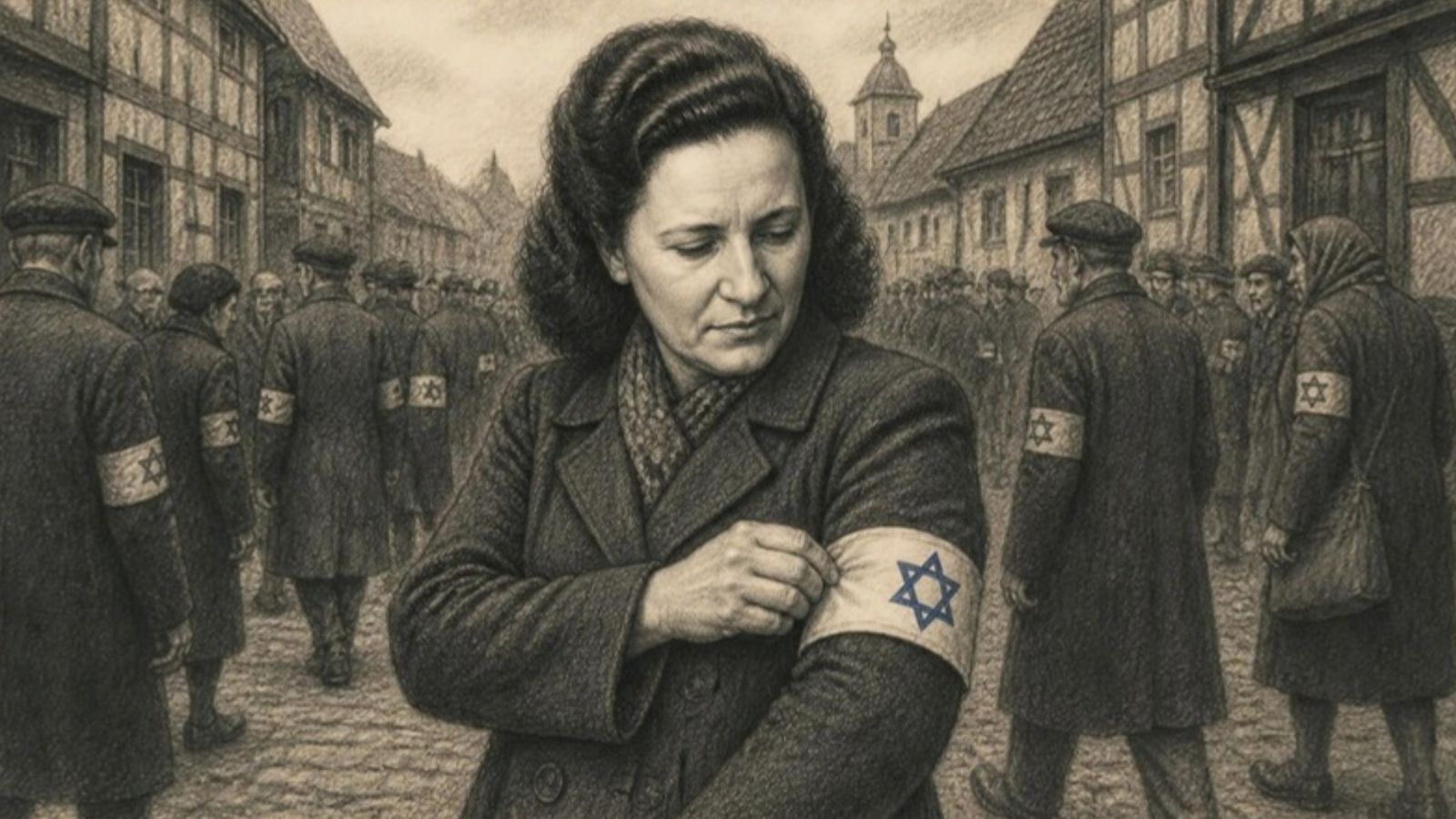
A fence went up around the Jewish quarter. Every Jew had to wear a white armband with the Star of David. Radios and newspapers were confiscated, travel was forbidden, and the Jews were cut off from the world. The German extermination machine worked at full scale and with cruel calculation, Szewa wrote. First came the decree that anyone leaving the ghetto would be shot. Food ration cards were handed out, under which people were condemned to starve. The crowding in the ghetto was great, and the sanitary conditions became unbearable. The manhunts for forced labor kept the ghetto in constant terror.45 Jewish property was taken too. On May 13, 1941, the German authorities recorded Motel's own property, in his name, on Kapitulna Street as confiscated, and on the same day his brother Meir's, on a street they had renamed Ostlandstrasse.46 In 1948 the family told the refugee agency in Germany that he had owned three houses in Ryki.47
Historical backgroundFrom December 1, 1939, every Jew over the age of ten in the General Government had to wear a white armband with a blue Star of David.48 A decree of October 1941 made leaving a ghetto a crime punishable by death, and set the same penalty for anyone, Poles included, who knowingly gave such a Jew shelter.49 In the Lublin District the German trustee office, the Treuhandstelle, took over Jewish real estate and kept a card for each property, with the owner's name, the address and the date it was confiscated.50 In Ryki a Jewish council, chaired by Szmuel Gutwajder, had to send hundreds of laborers a day to the Vistula flood works at Janiszów, the German SS labor camp at Bełżec, a road-building firm and the munitions depot at Stawy.51 The ghetto itself was set up in early 1941, most likely in March, in the most devastated part of town: the market square and Kanałowa, Kapitulna and Łukowska Streets, where Motel's own house stood.52 At first it was open. Refugees and expellees, among them 889 Jewish prisoners of war released from the Polish army, were packed in with the townspeople, about forty families to every building that could still be lived in.53 Typhus broke out in April 1941 and killed at least fifty people, and that summer the Germans closed the ghetto and wired it in, as a quarantine.54 In late September 1941 a Jewish relief report counted 2,920 Jews inside; estimates of the ghetto's population run from about 1,800 to 4,000, Szewa's own figure.55 Polish memories of those months, collected in Ryki in the 1990s, are frank on both counts. A Polish woman, Mrs. Stec, left a bucket of soup every day at the gate of the road-building camp for the Jewish workers, at the risk of her life.56 But there were denunciations too, and the commander of the Polish criminal police, Grabarczyk, shot Jews who were brought in to him; the Polish secretary of the town office saw a German gendarme kill four Jewish children for leaving the ghetto.57 The ghetto lasted about fourteen months, until the deportation of May 1942.58
71941
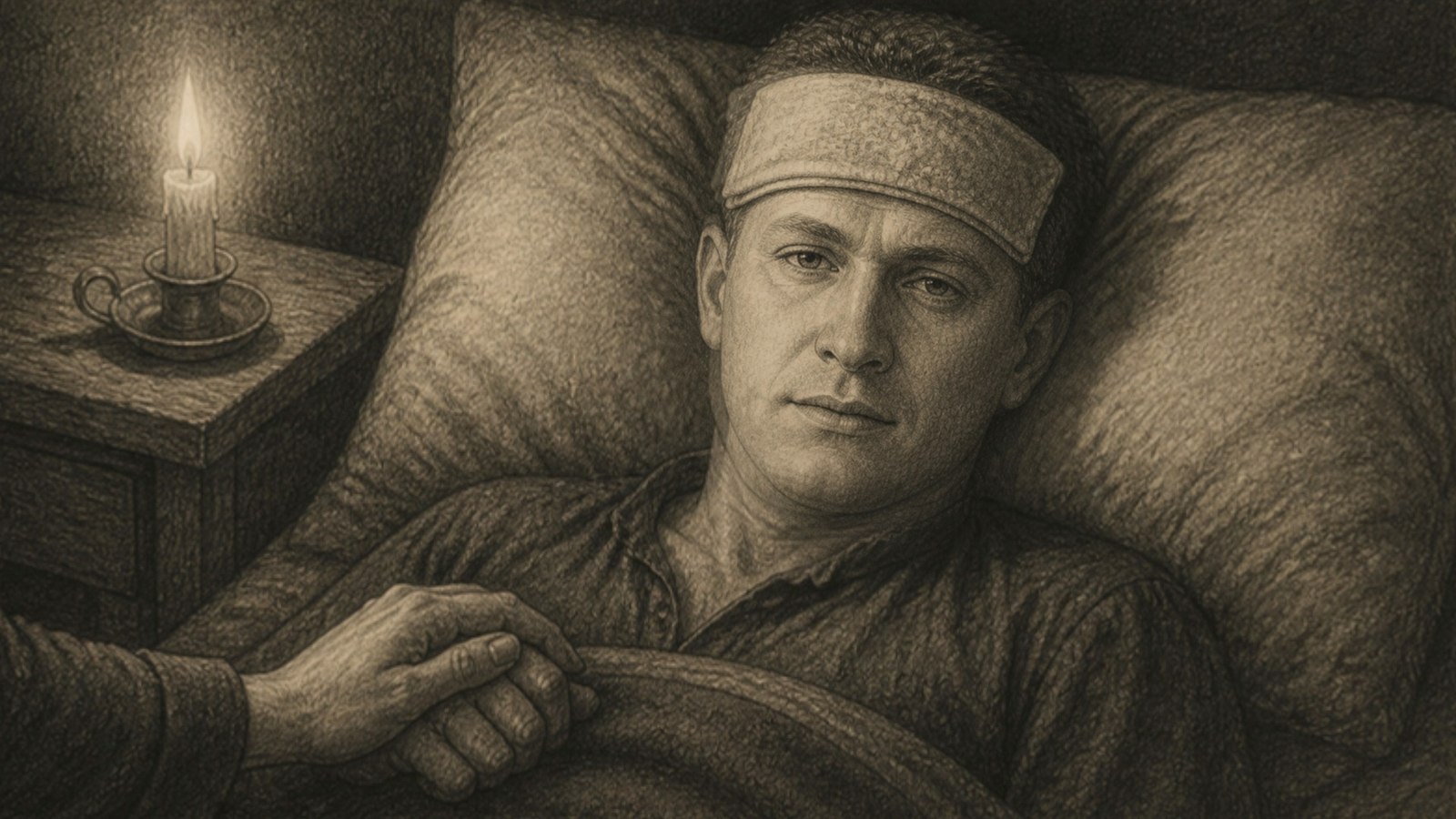
With hunger and crowding came typhus. A typhus epidemic broke out, Szewa wrote, and it did not spare Motel either. There was no medicine, and hundreds died. While he lay in bed with fever, word came that his brother Frutshe had been shot, and then his uncle, Meir Berezner. The murders had a powerful effect on Motel, who lay chained to his bed. He gave himself his word then that if he survived the grave illness, he would not let himself be led like a lamb to the slaughter, but would do everything to take revenge on the murderers. That feeling, she wrote, had already ripened in him at the very beginning, and he breathed it through all the later days and nights in which he devoted himself to the fight against the Germans.59
Historical backgroundTyphus, spread by lice, swept through the ghettos of occupied Poland, worst of all in 1941.60 German propaganda blamed the Jews for the epidemics and used them to justify sealing the ghettos tighter, which only made the disease worse.61
8The ghetto fence
Motel's brother Frutshe, whose full name was Efraim, had gone out of the ghetto to get hold of something to eat for the family. A murderous bullet from a German patrol struck him, Szewa wrote, and he was killed on the spot. In the same way Motel's uncle, Meir Berezner, was also shot. Every family in the ghetto faced the same choice each day: stay inside and go hungry, or go out and risk a bullet.62
Historical backgroundHunger was a weapon too. Official rations for Jews in the General Government were a fraction of what a person needs to live.63 In the Warsaw ghetto they came to under 200 calories a day.64 Smuggling, often by children, kept families alive, and it was punished by death.65 Other survivors of Ryki remembered the same deaths. Berl Bronkazh wrote that Benjamin Suchodolski, Mendel Teitelbaum and Efraim Fishtein, which was Frutshe's full name, were shot trying to get out of the ghetto, and that Meir Fishtein, the strongman of the shtetl, stood up to the Ukrainian police, and only after a long struggle did they manage to kill him. Josef Gutwaks remembered Suchodolski, Teitelbaum and Meier Barziner shot for stepping onto the sidewalk reserved for Christians.66
9Early May 1942
As soon as Motel was on his feet again, he began planning a way out of the ghetto. It was not merely an impulse, Szewa wrote, but a firm decision, one in keeping with his firm character and with the courage and daring for which he was known. Szewa went first. A few days before the end, she got out of the ghetto at night and made her way to the forest. Luck was on my side, she wrote, in that I had left the ghetto a few days earlier. She could not have known it then, but it was the decision that saved her life.67
Historical backgroundIn January 1942 Nazi officials met at Wannsee, near Berlin, to coordinate the murder of Europe's Jews.68 The Jews of the Lublin District were among the first to be sent to the new German Nazi death camps, extermination camps the Germans built in occupied Poland for no purpose but mass murder.69 In March and April about 26,000 Jews of Lublin were sent to the German death camp at Bełżec.70 A second, Sobibór, also in occupied Poland, began killing in early May.71 Szewa never wrote why she went first, or what she meant to do once she was out. The ghetto had reasons to fear. Through the early months of 1942 rumors of an “evacuation” ran through it, many Ryki Jews slipped away to the ghetto at Żelechów, and the Germans took family members hostage to stop them. On about May 6 the head of the Jewish council, Mojsze Wajsfisz, was shot, by one survivor's account for sending his own family to Żelechów.72 On the questionnaire she filled out in a displaced persons camp in 1946, Szewa dated her time with the partisans from May 7, 1942, the day the ghetto was emptied.73
10Ryki, May 7, 1942
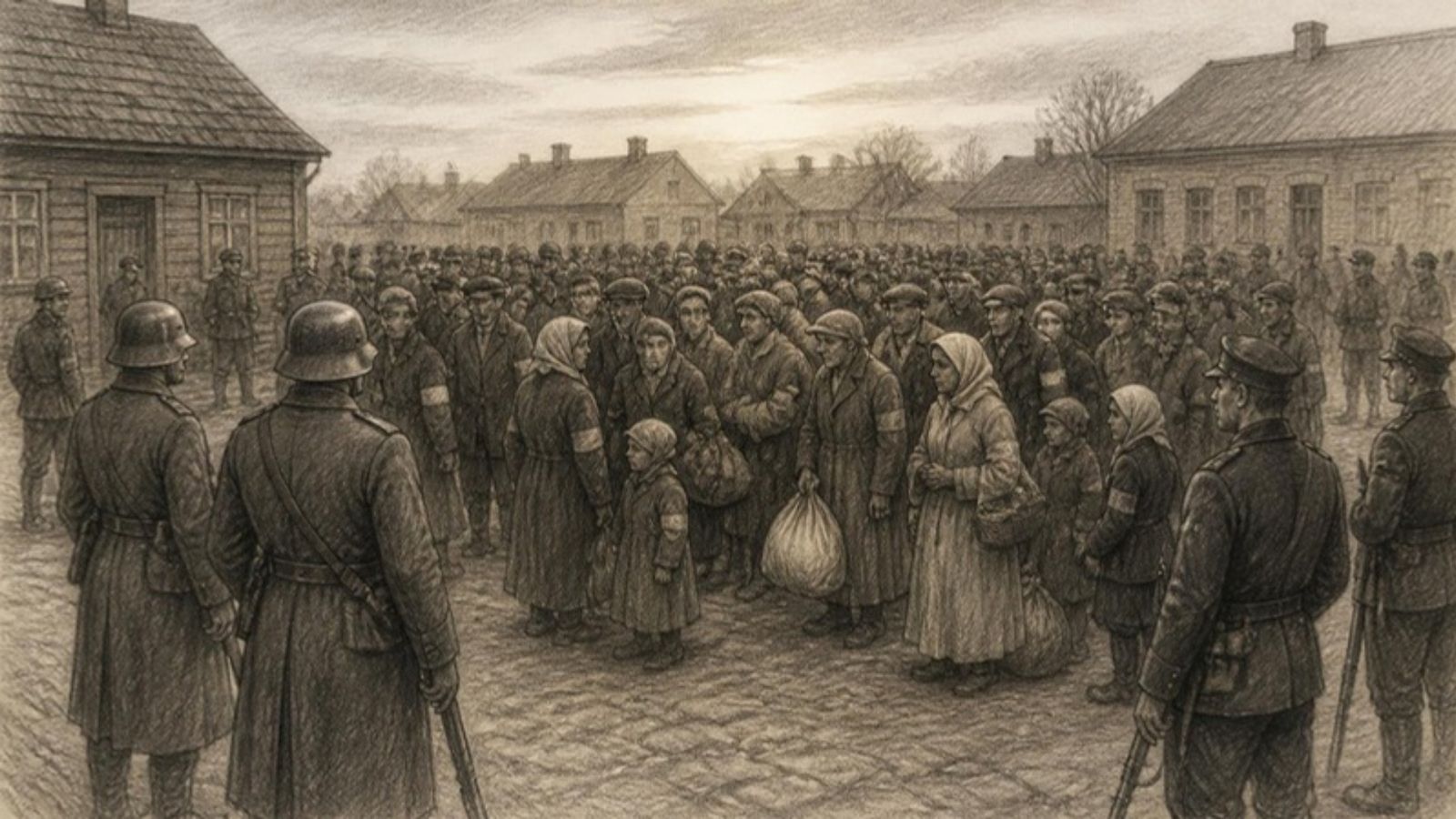
At dawn the ghetto was surrounded by Germans, with Lithuanian and Ukrainian auxiliaries and the local Polish police beside them. Szewa called it the black day when the German murderers surrounded the ghetto and began to take the Jews away. Every Jew was ordered into the market square, and there many were massacred, most of them children, the old and the sick. The rest had to hand over their money and jewelry. Then they were marched out of town toward the railway station at Dęblin. Along the road the guards shot 135 more. At the station a train was waiting. It went to Sobibór, a German Nazi death camp in the forest by the Bug River, in German-occupied Poland.74
Historical backgroundHistorians date the liquidation to May 6 to 8, 1942. The march to Dęblin was about eight miles, and between 130 and 150 people were shot on the way.75 By different counts, between 1,500 and 3,000 Jews of Ryki and the refugees sheltering there were put on the train.76 The Germans had begun gassing at Sobibór only days earlier, so the Jews of Ryki were among its first victims.77 That morning, a survivor wrote, word went around the square of fresh victims: Next to Moshe Goldes they shot Neytshe's Eiger. The most likely reading is that Szewa's father was shot in the market square that day.78
Part III
The Forest
The woods near Ryki and Dęblin, 1942 to 1943
11The edge of the forest
From the trees, Szewa watched the long column leave the town where her family had lived for generations. Somewhere in that crowd, as far as the family knows, were her parents, Moshe and Ester Fraidel; Motel's mother, Chaya-Ette, his sisters Sara Bluma and Sheindl, and his brothers Leizer and Meir, with Leizer's wife; and the aunts, uncles and cousins of the Fischteins and the Kurtzgants. None of them came back. Unless the Germans held them back at Dęblin, as they held Motel, whoever of them lived through the square and the road was murdered at Sobibór, the German Nazi death camp in occupied Poland. Szewa could do nothing but watch.79
Historical backgroundThe German death camp at Sobibór stood in the woods by the Bug River, about 50 miles east of Lublin and some 70 miles from Ryki.80 Most people were killed within hours of arriving.81 By October 1943 the Germans had murdered between 170,000 and 250,000 Jews there.82 On October 14, 1943, the prisoners rose up and broke out. About fifty of them lived to see the end of the war.83
12Dęblin, May 1942
At the Dęblin station the Germans pulled about two hundred men out of the crowd for slave labor at the Luftwaffe airfield and its ammunition depots. Motel was one of them. That is how he survived the day. In the forest, Szewa found a Polish man she trusted and sent him to find Motel with a message: she had escaped, she was alive, and she was in the forest.84
Historical backgroundThe Dęblin labor camps served the German air base and the huge prewar ammunition depot at Stawy.85 In October 1942 the remaining Jews of the Dęblin ghetto were deported to the German Nazi death camp at Treblinka, in occupied Poland, but the airfield camp kept Jewish prisoners working until July 22, 1944, days before the Red Army arrived.86 The airfield where Motel was put to work lay on the southern edge of Dęblin. Before the war it was the field of the Polish Air Force officer school, the School of Eaglets;87 under the occupation it was a large Luftwaffe base;88 and today it is a Polish Air Force training base again, the 41st Training Air Base (see it on a map).89
13Dęblin, 1942
At work, Szewa wrote, word reached Motel through the Christian I had sent to let him know that I was in the forest. This gave him courage, and it was not long before he carried out his escape from the camp and reached me in the forest. He was not going to wait for the Germans to decide when his work was done.90
Historical backgroundMotel was not the only man from Ryki to get out of the Dęblin camps this way. Manasha Bronkesh, born in Ryki in 1917, was held in the Dęblin labor camp from 1940 to 1943 and worked at the airport there, then escaped with a group of prisoners to the forest and fought with the partisans until 1945.91
14The forest, 1942
He found her, and their life in the forest began: the hard road on which we went through the cruel ordeals, day and night in the wild forest, surrounded by enemies within and without. On one side, the Poles, who hunted us in the forest. On the other side, the Germans, who from time to time carried out raids on our forest. By day they lay still among the dense trees and wild bushes, out of which we could not stick our heads into the light of day. Only with the coming of night, when it was already good and dark, could we stand up and move about carefully, taking care that no one, God forbid, should notice us.92
Historical backgroundAfter the deportations, German police and their helpers hunted systematically for Jews who had escaped, a campaign the Germans called the Judenjagd, the hunt for Jews. Informers were paid in cash, vodka or sugar.93 Historians estimate that tens of thousands of Jews who fled the ghettos of occupied Poland were caught and killed this way.94
15The forest, 1942
The worst was when it began to rain, Szewa wrote. There were times when the rain did not stop pouring for eight to ten days on end. Then we lay literally in a river of water. At night Motel would slip out of the forest, steal up to a neighboring village, and ask a peasant for something to eat. This carried great danger, because the peasants would often inform the Germans that in the area there were Jews. Sometimes, when he came to a peasant, he had to present himself as a partisan and take something to eat from him by force.95
Historical backgroundBy 1942 armed bands were already active in the forests of the Lublin District: escaped Soviet prisoners of war, communist partisans of the People's Guard, founded that January, and others.96 Farmers had good reason to fear a man who said he was a partisan, which is why Motel's bluff worked.97
16Autumn 1942
Szewa's brother Nathan had been held in the Dęblin ghetto with other Jews from Ryki. When the Germans emptied it, they were loaded into closed railway cars, like cattle to the slaughter. Nathan saw that he had nothing to lose, and he jumped from the moving train. The jump succeeded, and he wandered through fields and forests until, in a forest, he came upon his two sisters, Bluma and Sara Perl, wandering lost as well. They had heard that Szewa and Motel were alive somewhere in those woods.98
Historical backgroundThe Germans emptied the Dęblin ghetto in the autumn of 1942 and sent most of the roughly 2,500 people they rounded up to the German Nazi death camp at Treblinka, in occupied Poland northeast of Warsaw, where between 870,000 and 925,000 Jews were murdered.99 Szewa's Yiddish places Nathan in that ghetto, so this was most likely his train.100 Escape meant squeezing through the small barbed-wire window of a moving freight car while the guards escorting the train fired at anyone who jumped.101
17The forest, autumn 1942
Lying in the forest, cut off from the world, Szewa and Motel were constantly preoccupied with thoughts about our families, but they hardly dared speak. We guarded every movement, so that no one would hear a rustle. We communicated only in sign language. One evening they heard footsteps coming toward their hiding place. We put our ears to the ground and made out more clearly that these were the steps of a group of people. Our hearts began to pound faster, in great terror: any moment now, our end is coming. Two women and a man walked right past without seeing them, Jews in hiding like themselves. Szewa and Motel crept closer and saw that the women were her sisters, Bluma and Sara Perl, and the man was her brother Nathan. The joy was beyond measure, but mixed with deep sorrow. We were choking with tears. We did not know what to do with ourselves, we wanted to shout for joy, to rejoice at having found one another, but at the same time weeping tore out of us over the great catastrophe that had befallen the others of our large family.102
18Winter 1942
Winter came, with its cold winds and snowstorms, Szewa wrote. The leaves fell from the trees. The marks of our footsteps in the deep snow threatened to give us away. Motel went into a village and found a peasant who agreed to hide them through the winter, but only Szewa and her two sisters; he and Nathan would have to stay in the forest. He took Szewa out first. Nathan stayed with my two sisters to wait until Motel would come back and take them one at a time into the village. When he came back, they were not where they were supposed to wait for him. Trembling, he began to search for them among the bushes in the forest. In his mind the dreadful thought kept gnawing at him that a disaster had happened. He did not have to search for long, and he soon came upon the three bodies, which lay among the trees with bare feet.103
Historical backgroundIn occupied Poland, shoes and warm clothing were precious, and Jews in hiding were robbed and killed for them.104 Polish historians have documented many killings like this one by local people, in the Lublin District and across rural Poland, between 1942 and 1944.105
19Winter 1942
For Motel this was a terrible blow, Szewa wrote. Until then he had never seen such brutality. Broken, he came back to her in the hiding place, and for a long time could not get out a single word. His face and his dark silence told me at once that something terrible had happened. I began to beg him to tell me everything, and at last I managed to get out of him what he had seen and what he had lived through. We both sat there, broken and crushed, with no strength left to weep, and there were no more tears in our eyes. The heart became as if congealed, turned to stone by enormous grief and pain.106
20Winter 1942 to 1943
Their hiding place was the attic of a run-down little house. A dreadful cold reigned there that froze us to the bone, but we knew that we had to stay strong and not let ourselves be broken. In those great dangers the will to live grew stronger with every day. The urge for revenge burned in us. We wanted so badly to see the end of the Germans with our own eyes. No one except the peasant knew about the hiding place, and he knew only about Szewa. He was sure that Motel was with the partisans in the forest. That was also the reason he had allowed me to hide in his attic. At night Motel slipped down from the attic to get some food. He stole out quietly and came back even more quietly, so that no one would notice him.107
Historical backgroundUnder German law in occupied Poland, hiding a Jew was punishable by death, and from late 1942 the threat reached the rescuer's family as well.108 The Germans carried it out, sometimes killing whole households.109 Even so, thousands of Poles took the risk. More Poles are honored by Yad Vashem as Righteous Among the Nations than people of any other nation, over 7,000.110
Part IV
The Partisans
Around Dęblin, 1943
21Spring 1943
It was the spring of 1943, when we had gone back out to the forest, Szewa wrote, and on one bright moonlit night, when the sky was full of stars and you could see everything that was happening in the forest, we suddenly heard the noise of an airplane. It circled over the forest, and they could not tell whether it was Russian or German. We were full of fear, and it seemed to us that the Germans were searching for us. Having already slaughtered all the Jews, they were hunting down the remnants who were hiding in the forest. Then they saw men jumping from the plane and coming down on open parachutes. One came down near them, onto a tree, and there he got tangled in the parachute cords among the thick branches of the tree. He was left hanging among the branches and could not untangle himself. With the greatest caution they went up to the tree and saw before them a man fully armed, with a machine gun, and hung with hand grenades. He was half in a faint, and we helped him climb down from the tree. The branches had scratched him all over and torn the skin of his hands and legs. They bandaged his wounds and gave him a little water. When he came to, he introduced himself as the commander of a Russian sabotage group numbering five men. He said that his name was Serkisov and that their goal was to carry out acts of sabotage behind the German lines.111
Historical backgroundFrom 1942 through 1944, Soviet intelligence services, both the Red Army's and the NKVD's, parachuted small teams behind German lines in occupied Poland.112 They were usually a handful of people with a radio and explosives, sent to cut the railways that fed the Eastern Front.113 Serkisov's own team has not yet been found in the records.114
22Spring 1943
That same day the other five Russian saboteurs also gathered, Szewa wrote, and in the grove of young trees where we were hiding they set up a kind of military headquarters and held their council. They had various maps with them and a radio, with which they could make contact with the Russians on the other side of the front line. When night fell the noise of an airplane was heard again, and again their hearts trembled: who knew whether this was not a German plane now searching for the saboteurs? The Russians calmed us with their joyful shouts that these were ours. Serkisov fired a signal flare into the air, and the plane began dropping crates that hung from parachutes, and sacks too. These were crates of explosives. The sacks were full of food and clothing. And so, all at once, we found ourselves among a well-equipped Russian partisan group. We were overjoyed, and our morale rose. The whole time we had been in the forest, after all, our dream had been to join up with partisans and fight together with them against the Germans.115
Historical backgroundSoviet aircraft supplied partisans by night, dropping weapons, explosives and food to signal fires or flares on the ground.116 The drops let small teams operate for months deep behind German lines.117
231943
The Russians gave us weapons, and Motel became their guide, Szewa wrote. He knew the whole area superbly, the area where he had been raised from his early childhood years. From time to time we changed our location. At night Motel would go out with several partisans to carry out sabotage operations, blowing up military transports, railway lines and various military installations. Their targets lay around Dęblin.118
Historical backgroundDęblin was an important railway junction and held a large Luftwaffe base.119 Nearby Stawy had a huge prewar army ammunition depot, and the Germans ran a labor camp for Jews there.120 In 1943 Soviet partisans and Polish communist units in the Lublin region began blowing up German trains, and in 1944 their attacks on transports heading east helped the Red Army.121
241943
They would also blow up bridges, she wrote, but the whole time the partisans took care not to meet the Germans face to face. They also avoided showing themselves to the Poles, who knew that there were partisans in the area. In her later English account she added that they kept out of the way of the Polish underground army, the Home Army, which she remembered as hostile to Jews. To the farmers of the countryside he was Motek, the Polish form of his name. From ear to ear the peasants would tell one another that the Jew Motek from Ryki was going around with a machine gun and leading a group of partisans. Motek became a legendary figure among the peasants of the surrounding area. She, too, was later registered as a partisan.122
Historical backgroundTens of thousands of Jews fought as partisans in occupied Eastern Europe, in Soviet units, in Polish communist units and in Jewish groups of their own.123 The Home Army's record toward Jews varied from place to place: some units sheltered and armed Jews, while others turned them away or killed them.124
25Winter 1943
The winter of 1943/44 was drawing near, Szewa wrote, and the Russian partisans suddenly received an order to move out of the forest and go off to other forests. We grew sad at heart. The whole time we had been together, we had grown as close as one family, bound together by the shared dangers, the shared acts of revenge. But they could not take me with them, only Motel. He did not want to leave me alone, and so we had to part ways, with a heavy heart.125
Historical backgroundThat winter the front was moving west. In early January 1944 the Red Army crossed Poland's prewar eastern border, and Soviet partisan teams were shifted to new areas ahead of the advance.126
Part V
Osmolice
Near Ryki, winter 1943 to July 1944
26Winter 1943 to 1944
Once again we were left alone in the forest, Szewa wrote. The first snow fell, and with every day it grew colder. I caught a chill and came down with a high fever. At night Motel took me on his shoulders and carried me off to Osmolice, to the squire Niedzielski's estate, the estate manager who had leased him the orchards before the war and had been so fond of him.127
27Osmolice
Mr. Niedzielski opened the door. He led Szewa up to the attic in the strictest secrecy, so that, as she put it, God forbid, no stranger's eye should see me. What he was told was simple: the young woman would stay only until she was well, and Motel was going back to the forest, to the partisans. It was not the whole truth. This was both a pretext and a warning, Szewa wrote, so that he would know that we were under the watch of the partisans. The pretext let Niedzielski believe he was sheltering one sick woman for a few weeks, not two fugitives for as long as the war might last. The warning was quieter and harder: if anything happened to her, armed men in the forest would know where to come, and around Ryki the farmers were already telling one another about Motek, the Jew with a machine gun at the head of a band of partisans.128
In truth Motel never went back to the forest. He hid in the attic beside her, and late at night he crept downstairs and slipped quietly into the house, as if he had just come in from the woods. The game could not last. One day, climbing up to the attic with Szewa's food, Niedzielski found Motel there. He said nothing, and from then on he acted as if he did not know.129
Historical backgroundHiding Jews put the rescuer's whole household under sentence of death.130 Niedzielski did it in a manor where Germans came and went.131 Szewa never gives his first name, and no record has been found of his recognition by Yad Vashem as Righteous Among the Nations.132
28Osmolice, 1944
It was a hard winter, and the cold was unbearable. Szewa could hardly move her legs. Through the long days and nights we did not say a word to each other, she wrote, because more than once it happened that the Germans came to visit Niedzielski. Upstairs, two people lay still and breathed carefully. The slightest sound would have meant disaster, for the two of them and for Niedzielski, who would have paid with his head.133
29Osmolice, July 24, 1944
At last the summer of 1944 drew near, Szewa wrote. Motel came down from the attic, and I stayed behind alone, because I could not move. I was badly weakened. In the month of June 1944 you could already hear the echoes of the artillery fire drawing closer. The thunder could be heard ever closer and closer. One day Motel came up to me in the attic full of joy: the Germans were running away, pulling back to the other side of the Vistula. The Russian army was drawing near to us. On the 24th of July 1944 the first Russian patrols reached Osmolice. We came down from the attic. Exhausted and broken as we were, the feeling of liberation gave us strength. At last we had lived to see the German military being smashed.134
Historical backgroundIn the second half of July 1944 the Red Army's summer offensive swept through the Lublin region.135 Lublin was freed on July 24, the same day as Osmolice.136 That week Soviet troops entered Majdanek, the German Nazi concentration camp on the edge of Lublin where prisoners had been murdered by shooting and in gas chambers, the first major Nazi camp to be liberated.137 Dęblin, next to Ryki, was freed two days later.138
Part VI
After
Poland, Germany, Israel and Canada, 1944 to 1970
30Ryki, 1944
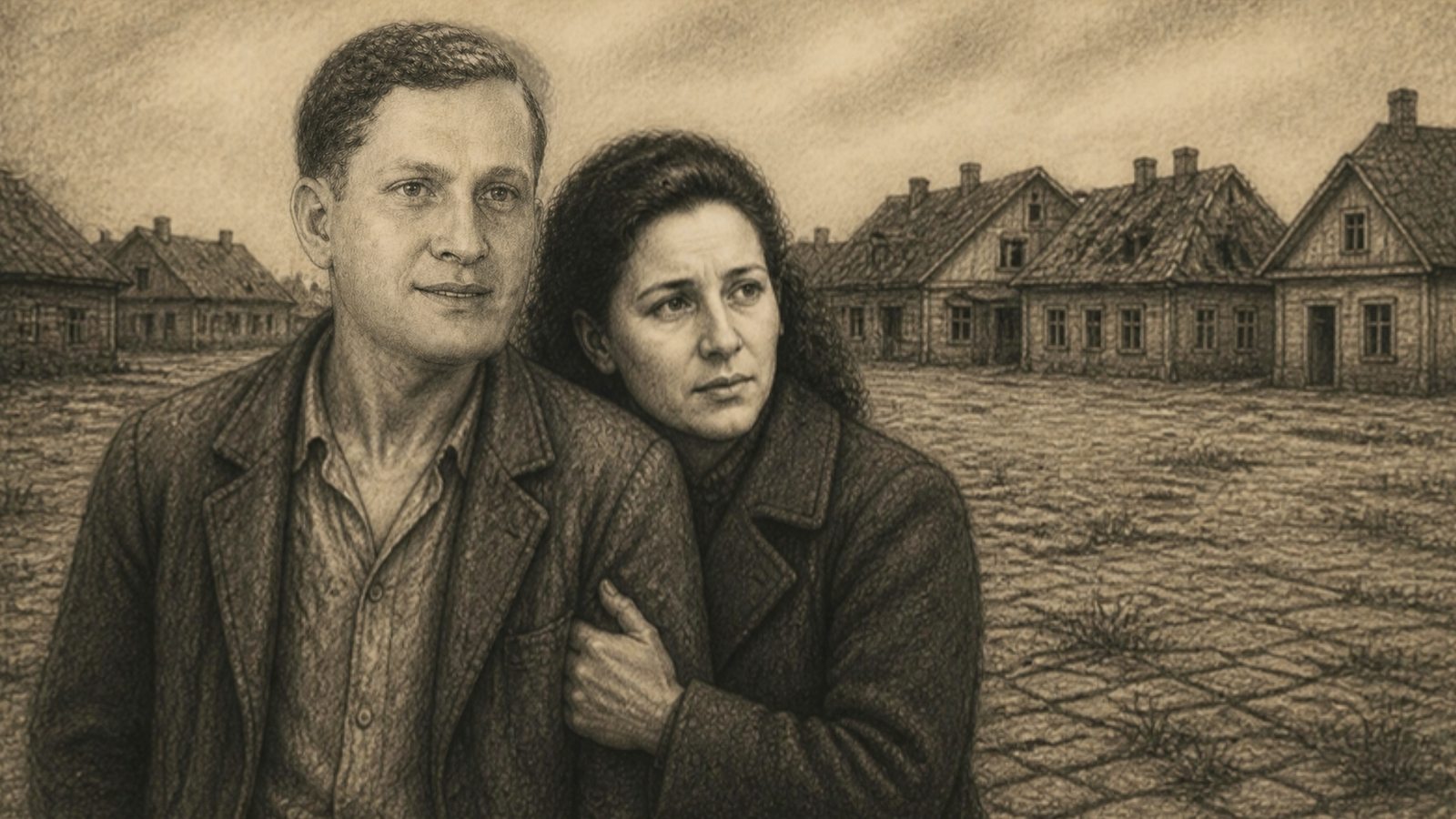
They set off at once for Ryki. In our hearts we still clung to a spark of hope, Szewa wrote: perhaps someone from our large families had been left after all. When we arrived in the shtetl it became clear to us, in all its sharpness, that no one, no one from either of our families had been left alive. We were left alone. Her brother Simon was among the lost. Lonely and crushed, we left Ryki, our native shtetl, where our parents and grandfathers had been born and had lived a warm Jewish life. We realized that the danger of death still hovered over our heads. The Poles, having found out that Motek was here in Ryki, began planning to kill him. The news of this quickly reached us, and we cleared out at once.139
Historical backgroundPoland had about 3.3 million Jews before the war, and about nine in ten of them were murdered in the Holocaust.140 Survivors who went home often found strangers in their houses and open hostility.141 Between 1944 and 1947 hundreds of Jews, by most historians' estimates more than a thousand, were killed in Poland, most notoriously in the Kielce pogrom of July 1946, when 42 Jews died.142
31Siedlce, 1944
They went to Lublin, where the remnants of rescued Jews from the surrounding region had begun to gather. There they learned that the new Polish authorities had arrested Niedzielski of Osmolice and sentenced him to death. It became clear to us that a terrible injustice was about to happen, the murder of an innocent and good man, Szewa wrote. Motek said that he had to do everything to save Niedzielski, who had done so much for us and had put his own life on the line in order to save us. Motel went straight to Siedlce, where Niedzielski was held, and found, she wrote, that he had been arrested as a wealthy estate owner and because his son-in-law was the well-known Polish general Sikorski, who had led the Polish army out of Russia and afterward perished in a mysterious way in an air disaster. It looked as if no power at all could save him from death. But Motel dug in his heels, moved heaven and earth, got through to the judges and to the very top of the Polish army, until he succeeded in carrying through Niedzielski's complete release.143
Historical backgroundFrom the summer of 1944 Lublin was the seat of the new Soviet-backed Polish authority, the Polish Committee of National Liberation.144 Its land reform decree of September 6, 1944, seized large estates, and many landowners were arrested or driven from their homes.145 Szewa's memory of the Sikorski connection is close to the record but not exact. Osmolice belonged from 1940 to Stanisław Leśniowski, whose son had married Sikorski's only daughter, Zofia. The Leśniowskis lived in Warsaw and left a manager in charge of the estate, which suggests that Niedzielski, whom Szewa calls the squire, ran Osmolice for them.146 The 1944 land reform register bears this out: it lists Osmolice, 63 hectares with its orchard and manor, under Stanisław Leśniowski's name, and no Niedzielski as the owner of any estate in the county.147 His first name is still being sought.
32Lublin, winter 1944 to 1945
Lublin was not safe for long. Word came that Poles from Ryki were searching for Motel and wanted to kill him. Then one winter day three of them walked into the house with revolvers in their hands and asked Szewa sternly, Where is Motek? By luck he was out. They sat down to wait. They waited for hours, and when he did not come they left, saying they would be back.148
Lublin also gave them someone to save. The Peretz House was the shelter the Joint ran in Lublin for survivors, and inside it was an orphanage. One of the children registered there was a girl of thirteen from Dęblin, eight miles down the road from Ryki, named Golda Wainberg. Her mother had died in the Dęblin camp. Years later, in America, she would be Gloria Wurman, and in old age she told the story of the day Motel and Szewa walked into the Peretz House: a couple came in, his name was Motel Fischtein, with his wife. And they start talking to me and they knew a lot of people from Dęblin. And I told them who I am. And he said, oh yes, we know, we are related. The relation was on Szewa's side. She was my cousin, Gloria said of her, my cousin, second cousin, third cousin too. How close the cousins were, she could not say, and no one now knows how the Kurtzgants of Ryki and the Wainbergs of Dęblin were joined. Motel and Szewa asked her to come to the apartment they had taken in the city, where Szewa had set up a kitchen and cooked for the survivors coming back. She peeled potatoes and she cooked for them. She said, would you like to stay here a little bit and help me a little? ... I stayed there and I didn't want to go back there anymore. She never returned to the orphanage. Szewa, she remembered, was already expecting a child. Gloria stayed with them from then on, and her story runs beside theirs to the end of this book.149
Historical backgroundThe Joint, as everyone called it, was the American Jewish Joint Distribution Committee, founded in New York in 1914 by American Jews to send relief to Jews in need abroad. Through the war it smuggled money into the ghettos of occupied Poland, and after liberation it paid for much of the food, clothing, shelter and orphan care that survivors depended on.150 In November 1944 survivors in Lublin founded the Central Committee of Polish Jews to find and help the living.151 In Lublin, too, former Jewish partisans started the Bricha, the secret network that would smuggle Jews out of Poland toward Palestine.152
33Łódź, 1945
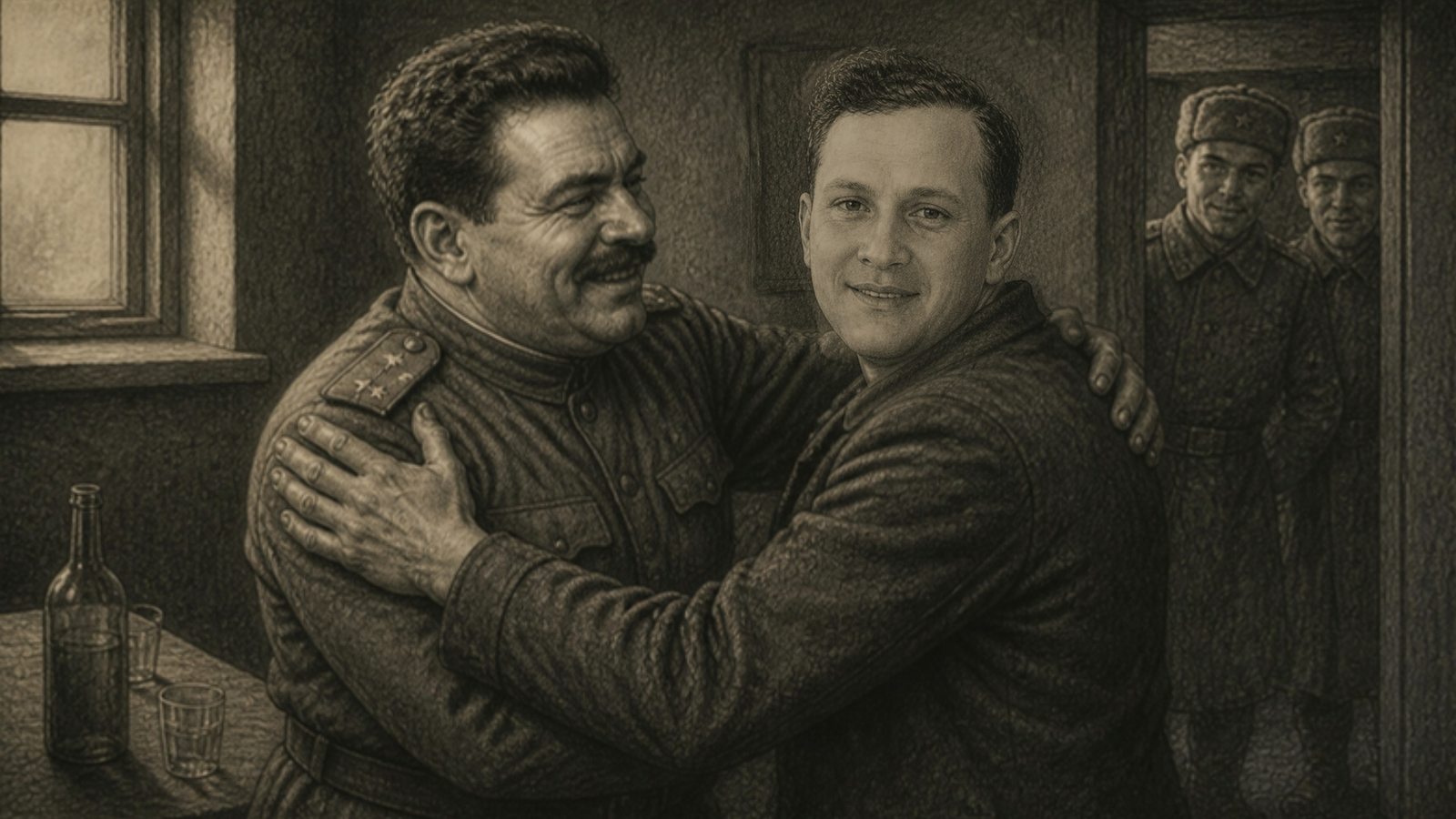
They went on to Łódź, where the surviving remnant of Polish Jewry had gathered, Szewa wrote. Motel went to the commandant's office at the Łódź city council to take care of a matter of his own. There he noticed a face that was very familiar to him. It was an officer with the rank of major. When their eyes met, both of them cried out at once: Serkisov!Motek! They fell on each other's necks, embraced, and kissed. The officers around them looked at this scene in astonishment and did not know what had happened here. His partisan commander from the forest was now the city commandant of Łódź. The two of them were bound by shared experiences, she wrote, by dangers they had both gone through together, by dozens of times when one had saved the other's life. Serkisov took Motel into his office, where of course, a little bottle of liquor was opened and they drank l'chaim, and he gave Motel the rank of lieutenant, a porucznik, and kept him on as his deputy, the vice-commandant of Łódź.153
Historical backgroundBefore the war about 230,000 Jews lived in Łódź, a third of the city.154 The Łódź ghetto was the last in Poland to be destroyed, in August 1944.155 The city came through the war largely intact, and in 1945 it became the main center of Jewish life in Poland.156 Szewa's Serkisov is Major Aleksander Sarkisov, who from the middle of 1945 headed the Soviet military commandant's office in Łódź, at 21 Pomorska Street; it worked alongside the Polish city command, which explains Motel's title.157 Other Jewish partisans from Ryki also took posts in the new Poland: Sam Bronkesh, who had fought with the partisans in the forest, served after the war as a police officer in Lublin.158
34Łódź, June 1945
When Motel came home, Szewa almost didn't recognize him. He was wearing a Polish officer's uniform decorated with medals. Soon he had a new name. To the Jews of Łódź he was Motel Porucznik, Motel the Lieutenant, and that is what he was called for as long as he stayed in Poland. He quickly became a well-known figure among the Jews of Łódź, Szewa wrote, who knew that with any difficult problem they could turn to the Jewish vice-commandant, Motel. In that period Motel helped a great deal in the Bricha, and arranged transit papers for bringing Jews over to Germany. But all this time Motel was aware that he was surrounded by antisemites. He saw how antisemitism was rising from day to day and that the ground was literally burning under his feet. He therefore decided to leave Poland. On June 3, 1945, in the middle of it all, their first daughter was born. They named her Golda, after Szewa's grandmother, and called her Goldy.159
Historical backgroundBetween 1944 and 1948 about 250,000 Jews left Eastern Europe, most of them with the help of the Bricha. Most crossed into displaced persons camps in the American zones of Germany and Austria, on the way to Palestine.160 Forged papers, or the help of a sympathetic official, could make the difference at a border.161
35Zeilsheim, 1945 to 1948
At the end of 1945 the family left Poland for Germany: Motel, Szewa, little Goldy, six months old, and Gloria, then a girl of thirteen. They went first to Berlin, in the American zone, then to the camp at Zeilsheim near Frankfurt. Gloria remembered the journey: We wanted to go away, go to Germany, from Poland to Germany, because everybody wants to immigrate, or to Israel or to America. And from Poland, you cannot do it. They moved from city to city, and the trains were full and closed to them, but Motel, Gloria said, was very famous and he could go in places in the train to get us a place to sit. And we went to Germany. Asked how Motel was famous, she said: He was in the Polish army. And he was like an officer there. And he knew all the things to do.I was with them in the DP camp in Zeilsheim, she said, registered as an orphan, which put her first in line when a place came up on a ship; she sailed on with a group of orphans to New York.162Zeilsheim was at that time a transit camp for the surviving remnant, Szewa wrote. It was a kind of emigration point for Jews, who traveled from there to different corners of the world, some to the United States, some to Canada and the Land of Israel. There was also an underground movement, which in various ways took part in the struggle for the establishment of the Jewish state. Motel was among the most active participants. On May 20, 1947, a second daughter was born. They named her Chaya-Ette, after Motel's mother, and called her Edna.163
Historical backgroundZeilsheim was an all-Jewish displaced persons camp run by the United Nations relief agency, UNRRA, with about 3,500 residents by 1946.164 It had its own schools and newspapers, and it was a center of Zionist politics, the scene of many protests against British limits on immigration to Palestine.165 David Ben-Gurion came to speak there, and Eleanor Roosevelt visited in February 1946 and wrote about it in her newspaper column.166 Gloria Wurman, born Golda Wainberg, was a girl from Dęblin who survived the camps at Dęblin and Częstochowa. In the USC Shoah Foundation's index of her 2021 testimony, Motel Fischtein, listed as a relative, appears in the part set in Lublin after the liberation, where she leaves Poland for Germany and goes on to the camp at Zeilsheim.167 Her husband, Nachemia Wurman, was born in Kurów, near Lublin, in 1927. He escaped the camp at Ostrowiec in 1944 and fought with the Armia Ludowa, the People's Army of the Polish communist underground. Then, under a false name, he passed as the son of a German father and a Polish mother and worked as a cook in a German army unit, until he crossed to the Soviet side in January 1945.168 His own road ran beside the Fischteins': Lublin in 1945, looking for family; then Zeilsheim, ten kilometers from Frankfurt, where, he said, I became a member of the Irgun, of the underground, Jewish underground, what fought in Palestine at the time; Israel in 1948 and its wars; and end of '67 I came here with my family in Canada.169 He told his story in a book, Nachemia: German and Jew in the Holocaust, written with Margaret Russell, and on camera three times: in Toronto in 1987, in North York in 1995, and in Florida in 1997.170
36Lampertheim, November 1948
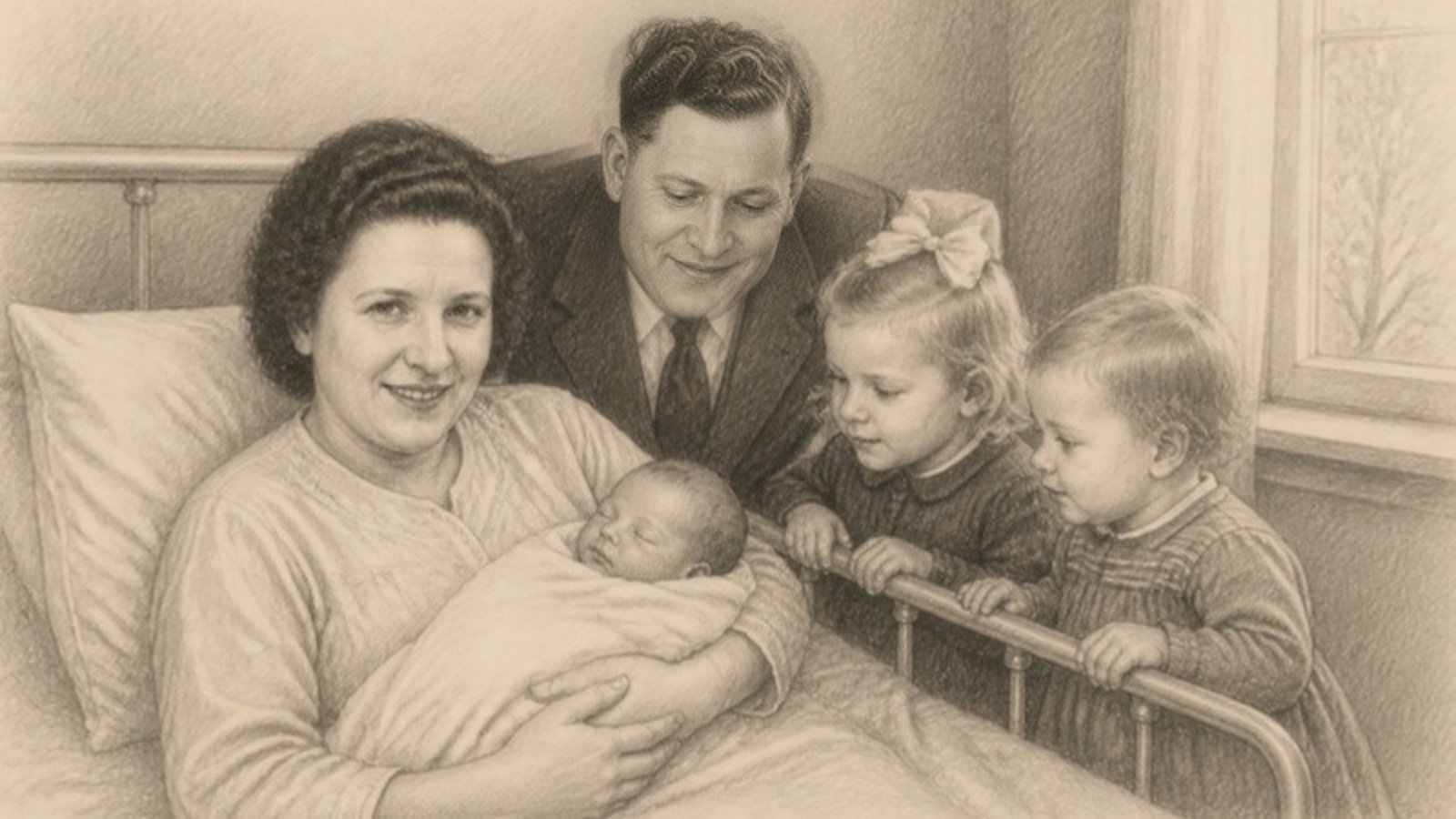
When Zeilsheim closed in November 1948, the family moved to the camp at Lampertheim, south of Frankfurt. Eight days later, on November 19, Szewa gave birth to a son. They named him Moshe Leib, after her father and Motel's father, two grandfathers he would never know. The family calls him Morris.171
Historical backgroundAt their peak in 1947, about 250,000 Jewish displaced persons lived in camps in Germany, Austria and Italy, many of them for years.172 Thousands of babies were born in the camps, a defiant baby boom among people who had lost nearly everyone.173
37Leaving Germany
On May 14, 1948, the State of Israel was declared, and the next day it was invaded. In the year 1948, when the Jewish state was proclaimed and heavy fighting broke out in Israel, Szewa wrote, Motel flew off to Israel in an airplane. He was determined to be part of the new state and to build there. A photograph in the Ryki memorial book shows him on the steps of that plane. I, with my three children, soon went off to Israel as well. The camps had been a waiting room. Now, at last, they had somewhere to go.174
Historical backgroundOf the roughly 700,000 immigrants who reached Israel between 1948 and 1951, a large share were Holocaust survivors, many of them straight from the displaced persons camps of Germany, Austria and Italy, which emptied within a few years.175
38Israel
In Israel, Motel did what he had always done: he found the work that was needed. After a certain time Motel began to look around, Szewa wrote, and right away took up various investments, especially in building houses. The country was filling with newcomers and short of homes. The family made its home in Ramat Gan, beside Tel Aviv, and the children grew up in the sun. After everything, they had a home.176 In the spring of 1950 Gloria, grown now and living in Philadelphia, came to Israel by boat for a visit. On the quay, among the people waiting, were this couple, Motel Fischtein, and they had a little girl already. Within two months she had married Nachemia Wurman, on April 30, 1950, and the Wurmans too made their home in Ramat Gan.177
Historical backgroundIsrael's population roughly doubled in its first four years.178 Hundreds of thousands of immigrants lived in tents and tin huts in transit camps, the ma'abarot, and the young state struggled to house them.179 The Wurmans lived in Ramat Gan as well, and the index of Gloria Wurman's testimony names Motel Fischtein again in that part of her story.180 Motel also ran a garage; when David Remez, Israel's first minister of transport, died in 1951, his aide Baruch Hermon, a Ryki man, went to work in the garage of Motl Fishtein.181
39Visiting the president, the 1950s
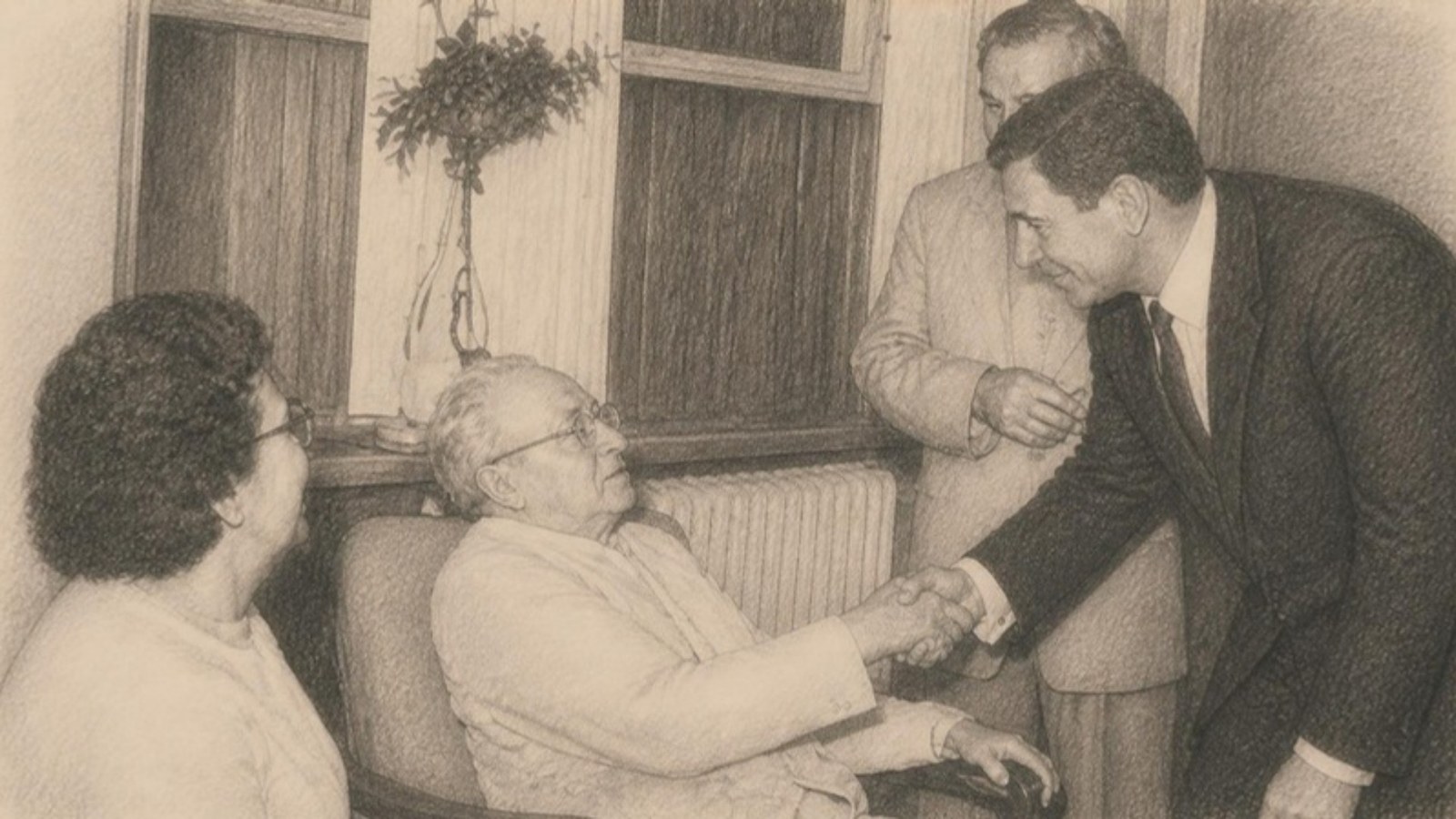
Among the photographs printed with Szewa's chapter in the Ryki memorial book is one of Motel calling on Yitzhak Ben-Zvi, the president of the Jewish state. The old man sits in an armchair by a window, and Motel, in a dark suit, bends down to take his hand. The caption beneath it reads: Motel Fischtein visits the President of the Jewish State, Yitzhak Ben-Zvi, of blessed memory.182
Historical backgroundYitzhak Ben-Zvi was elected Israel's second president by the Knesset in December 1952. He served three terms and died in office in April 1963.183
40Tel Aviv, 1957 to 1960
In February 1957 Israel's newspapers reported that Motel's company, M. Fischtein, had signed with the United States government to build a new American embassy on the Tel Aviv seafront and lease it to the Americans. He had flown to America twice to negotiate it. In September 1959 the frame of the building was finished, and in November 1960 the embassy moved in.184
Historical backgroundThe building on HaYarkon Street, built by Solel Boneh in partnership with the Fischtein company, served as the American embassy until the embassy moved to Jerusalem in 2018.185
41America, then Toronto
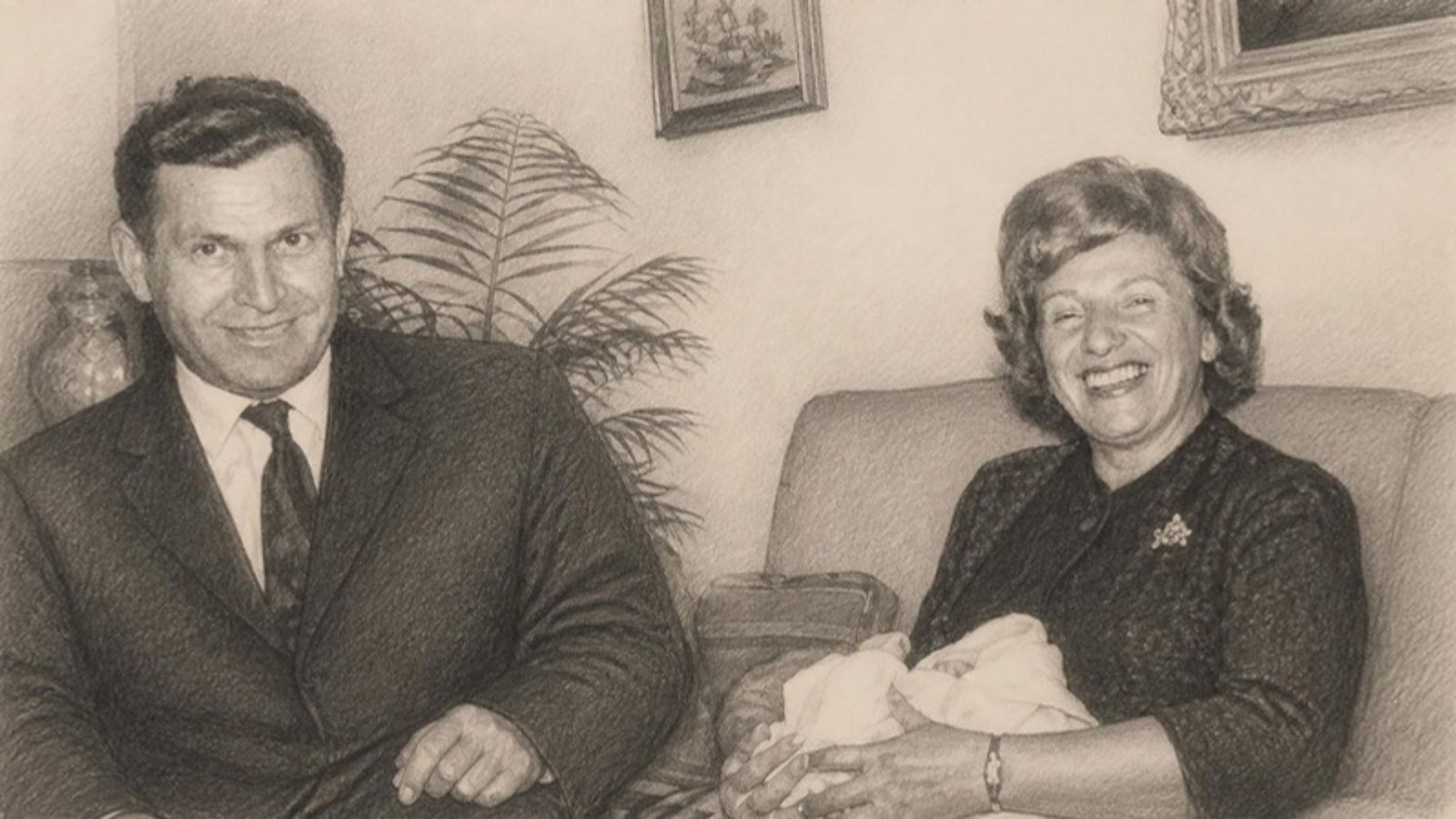
In March 1956 Szewa and the three children sailed from Israel for the United States, on a family vacation for Passover.186 When the holiday was over they stayed a little longer, in the Essex Hotel in New York, waiting for immigration papers that never came; Moshe, the youngest, was seven. America would not take them, and in June 1956 they drove north to Canada.187 They were there at the end of that October, when war broke out in Sinai.188 Motel stayed on in Israel, building, and joined them a year or two later. Canada's rules did not fit them either, and on April 16, 1959, the federal cabinet approved all five as immigrants by a special order in council: Motel, stateless and born in Poland, and Szewa and the children, Golda, Chaja and Moshe, thirteen, eleven and ten, all citizens of Israel. All five were already living in Canada.189 In Toronto he built again, as president of a building firm, Good Luck Construction, and the family made its home on Blue Forest Drive in Downsview. In June 1967 Gloria Wurman was in New York with her three children, on what had been meant as a vacation, when the Six-Day War broke out and Nachemia was held in the army. After a month, she remembered, this cousin of mine, Fischtein, as she called Motel, her cousin Szewa's husband, came to New York and he took us by car, we went to Canada. He said, New York is not a place for you. You come to Canada. The Wurmans lived with the Fischteins in Bathurst Manor until Nachemia arrived, and then took an apartment on Goldfinch Court, in a building Motel's company had put up.190 A photograph from those years shows them on a peach sofa: Motel grinning, Szewa laughing, a baby in her arms. Motel was very successful in the businesses he went into, Szewa wrote, and we could have lived happily if not for the heavy misfortune that came upon us so unexpectedly and suddenly tore my Motel away from us. He was still so young and full of initiative.191
Historical backgroundIsrael's Sinai Campaign, Operation Kadesh, began on the evening of October 29, 1956, when paratroopers dropped near the Mitla Pass in Sinai.192 Morris, who was seven, remembers sailing from Israel in March 1956, seven months before it began, on what he understood to be a family vacation for Passover, and reaching Canada by June. Szewa and the children did not leave because of that war; they were already abroad when it came.193 In the 1950s the United States admitted immigrants by country of birth, and the yearly quota for people born in Poland was about 6,500, with long waiting lists.194 The postwar Displaced Persons Act, which had let in more than 350,000 refugees, had closed in 1952.195 Canada, short of workers and growing fast, was taking in large numbers of immigrants.196 Immigrants who could not meet sections 20 or 21 of the Immigration Regulations could still be admitted by an order of the federal cabinet, and the Fischteins were admitted that way.197 The order lists Motel as fifty and Szewa as forty-three, the ages that follow from the birth years on their displaced persons papers in Germany, 1909 and 1915. Their gravestones give December 15, 1916, and December 25, 1920, which made them forty-two and thirty-eight that spring, and this book follows the stones, as their son Morris asked. Those are the days the family celebrated. The 1909, Morris says, had something to do with army conscription in Poland.198 The baby in Szewa's arms in the peach-sofa photograph was Will Pegg; his story is in the afterword.199 The Wurmans settled in Toronto in 1967.200 The index of Gloria Wurman's testimony links their move with Motel Fischtein.201 Szewa's chapter says the family settled in Toronto in 1951. The Canadian order in council of April 1959 and the family's account of leaving Israel in 1956 put the move later, and this book follows them.202
Epilogue
42Jerusalem
Motel died in Toronto on November 27, 1970, and was first buried there.203He was all of 53 years old, Szewa wrote.204 It was his wish to be buried in Israel, and fourteen months later, on January 11, 1972, the family brought him to Jerusalem, the holy city, Szewa wrote, which was so dear and beloved to him.205 He lies in the Sanhedria cemetery. Szewa lived on for twenty-four years. She died in Miami on December 27, 1994, and was laid beside him. In a later account, in English, she wrote that she had only scratched the surface of her journey. She wanted her children and grandchildren to know two things: that the Jews were the victims of hatred, and that not all of them went like sheep. Many fought back. Their stones lie side by side under the cypresses, and their story has been told.206
Historical backgroundIn the spring of 1948, as fighting closed the road to the ancient Jewish cemetery on the Mount of Olives, burials there stopped, and Jerusalem's burial societies were given new ground in the west of the city. From 1948 to 1967, while Jordan held the Mount of Olives, Jews could not bury their dead there.207 Szewa's chapter gives the date of Motel's death as November 22, 1970; his gravestone gives 28 Cheshvan 5731, which is November 27, and the death notice in the Canadian Jewish News says November 26. This book follows the stone.208 Her chapter names the burial ground as Har HaMenuchot; the stones stand in the Sanhedria cemetery, and this book follows the stones.209
Afterword
In their memory
Fischtein Hall
In Toronto their name is on a synagogue. At Beth Emeth Bais Yehuda Synagogue, on Elder Street in Bathurst Manor, about half a mile from the family's home on Blue Forest Drive, the great hall is Fischtein Hall.210 A bronze plaque inside, in English and Hebrew, says that Sheva, their children and their grandchildren dedicated it in honour and everlasting memory of Motek Fischtein on December 27, 1970, a month after he died.211 Week after week the hall fills with people who never knew him.212 This book is for anyone who has stood in that room and wondered who he was, and who she was: the orchard at Osmolice, the ghetto in Ryki, the forest, the partisans, the attic, and the long road through Łódź, Zeilsheim and Israel to Toronto.
A baby on Szewa's lap
The photograph behind page 41, of Motel and Szewa on a peach sofa with a baby in her arms, has a story of its own. The baby was Will Pegg, and the woman beside them was his mother, according to his friend Mike Hume.213 Will Pegg grew up to be a gardener in Victoria, British Columbia. He learned in January 2017 that he had cancer in his bones; a CBC Radio documentary, One More Moment, followed his last year, and he died in September 2018 with his wife, his friends and his spiritual community around him.214 That June, Mike Hume, who as a boy had lived next door to Szewa, wrote to the family that Will Pegg's memorial pamphlet credited Szewa and Motel as the most important influences in steering him to a life of kindness and open-heartedness, and that he had a lifetime's worth of gratitude and respect for them. Of Szewa herself, Mike Hume remembered her grace, composure and wisdom.215
Yizkor
In memory of their families
Szewa dedicated her account to them. They were murdered in the Holocaust.
The Kurtzgants
Szewa's family
Moshe Kurtzganther father, called Moshe Goldes
Ester Fraidel Kurtzganther mother
Blumaher sister
Sara Perlher sister
Nathanher brother
Simonher brother
The Fischteins
Motel's family
Chaya-Ette Fischteinhis mother
Leizerhis brother
Frutshehis brother
Meirhis brother
Sara Blumahis sister
Sheindlhis sister
Frutshe was shot outside the ghetto while looking for food for the family. Bluma, Sara Perl and Nathan were murdered in the forest in the winter of 1942. Of the others, no one ever learned where or when they died; most of them were very likely among the Jews of Ryki taken to Sobibór, the German Nazi death camp in occupied Poland, in May 1942.
With them we remember Motel's uncle, Meir Berezner, Leizer's wife, and the aunts, uncles and cousins of both families whose names were never written down.
May their souls be bound up in the bond of eternal life.
About this book
The story follows Szewa's own account, written in Yiddish for the Ryki memorial book, Sefer Ryki (Tel Aviv, 1973), and in her longer English testimony, "My Journey Across the Landscape of Hell That Was the Holocaust." The words here are a retelling. The passages in italics are her own words, translated for this book directly from her Yiddish chapter, not from any earlier translation; each is noted to its page in Sefer Ryki. Where the retelling draws on the English testimony, the notes say so. Births, camps and dates after the war come from the family's displaced-persons records in the Arolsen Archives.
Every historical statement in the notes marked History is numbered to its source, and the notes and a full bibliography follow the map at the end of the book. Where historians still disagree on a number, it is given as a range.
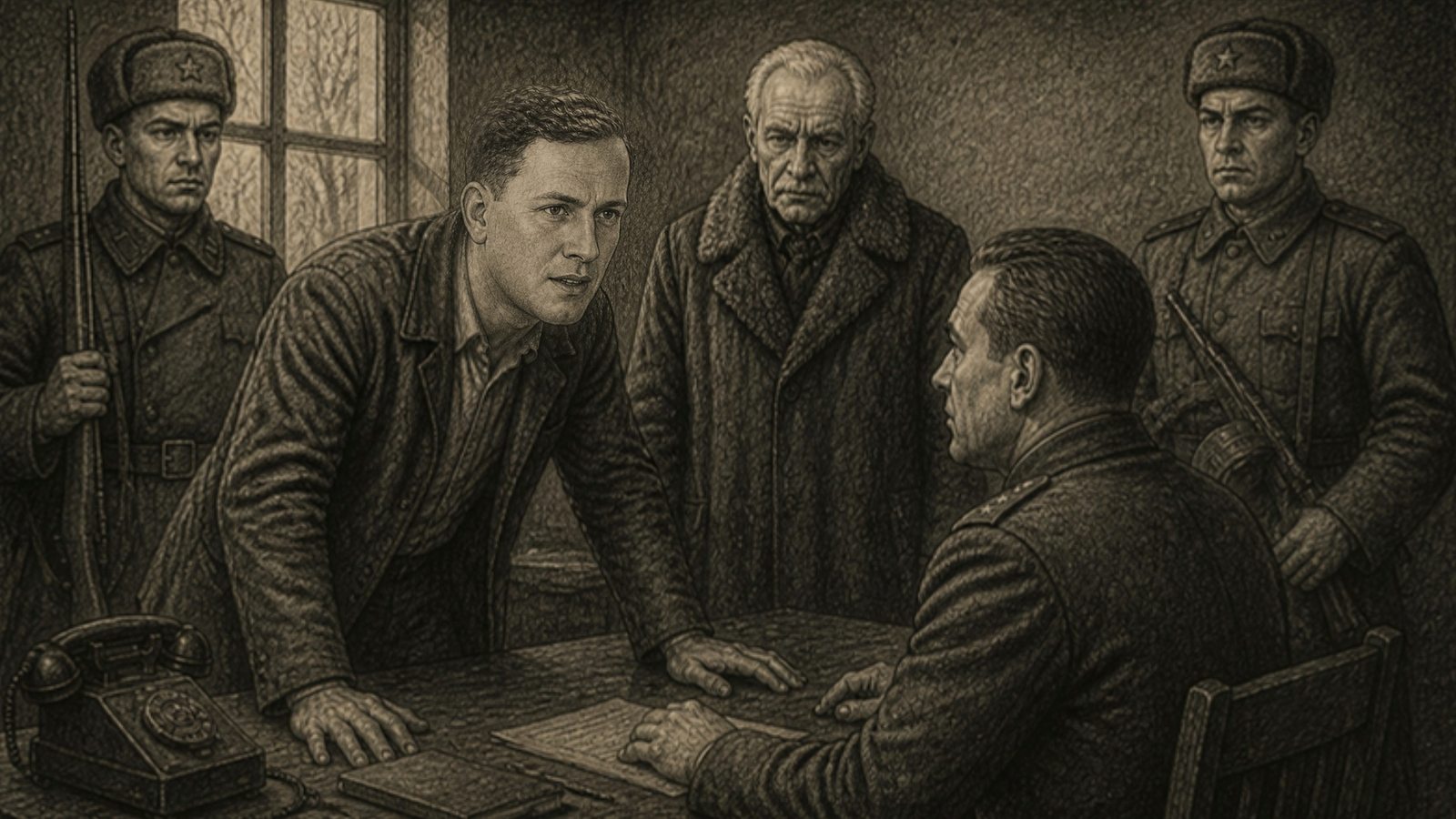
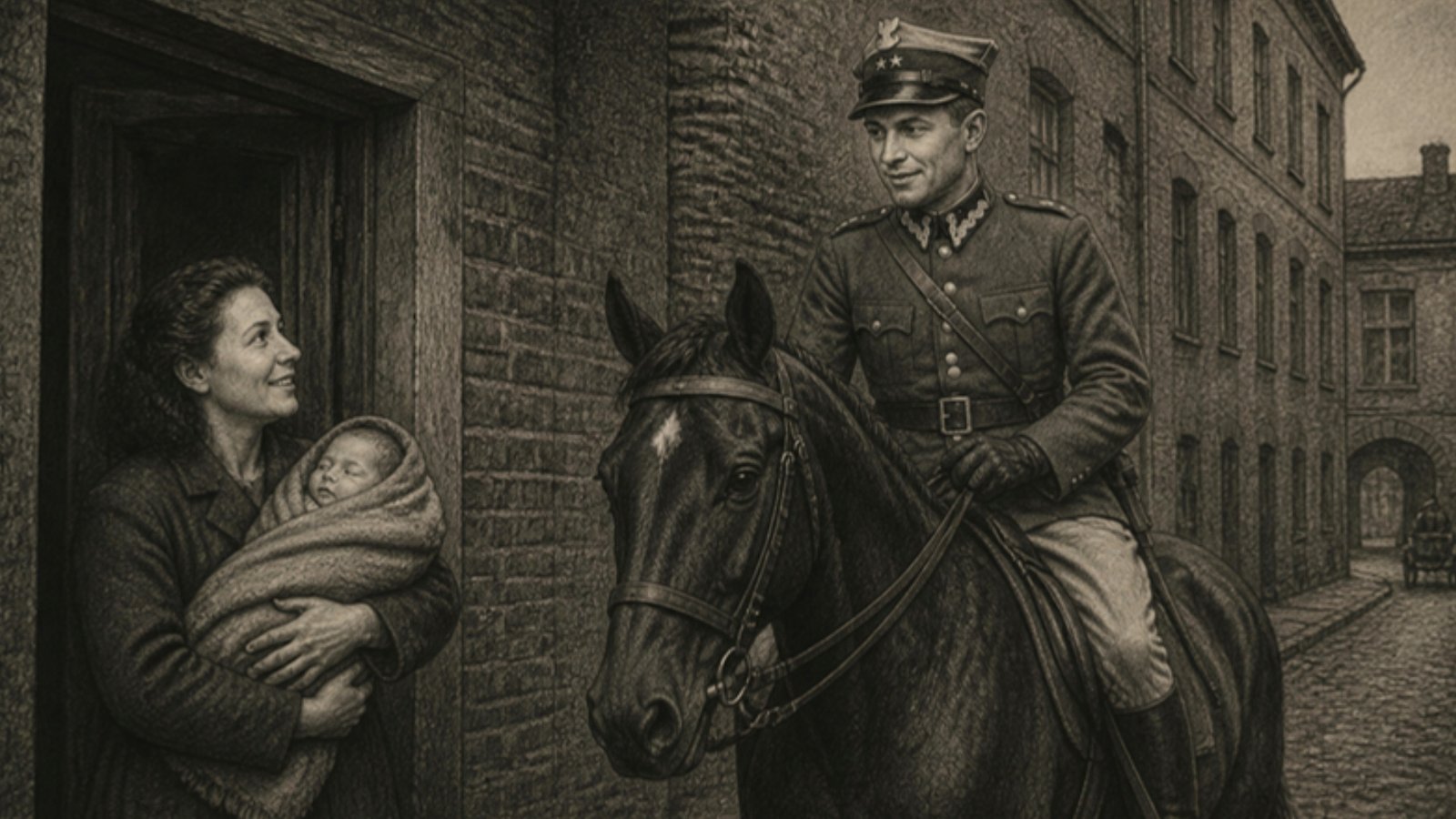
The pictures are an artist's interpretation, drawn from family photographs and descriptions. The faces are approximate. The drawing of Motel with President Ben-Zvi follows the photograph printed in Sefer Ryki, page 536, and the embassy building follows a 2008 photograph by Krokodyl (CC BY 3.0, Wikimedia Commons). The graves on the last page are drawn from a family photograph taken at the Sanhedria cemetery on March 6, 2024, and their inscriptions are reproduced from it as carved. Bluma, Sara Perl and Nathan are shown as Motel found them, barefoot in the snow where they fell; the killing itself is not shown, and the murders of the Jews of Ryki are not shown at all.
Most of the pictures move. Candles and lanterns flicker, rain and snow fall, smoke rises, the wind moves the grass, the rye and the trees, the mill wheel turns, the supply parachutes drift down over the forest, and the cypresses stir above the graves. All of it is made from the drawings themselves; nothing on a face or a body moves. The deportation from Ryki and a few other pictures stay still on purpose. Everything stays still if your device is set to reduce motion.
A few dates are still being checked with the family, including the years in Israel and the move to Toronto.
Motek (M. Will) Fischtein, Szewa and Motel's grandson, found these accounts by people who knew them or shared their road. Nachemia Wurman, born in Kurów near Lublin and close to the family, wrote the epilogue to Szewa's English testimony and a book of his own, Nachemia: German and Jew in the Holocaust, with Margaret Russell (New Horizon Press, 1988). He told his story on video three times, for collections now held by the USC Shoah Foundation: in Toronto in 1987 (watch it online), in North York in 1995 (catalog record) and in Miami Gardens, Florida, in 1997 (catalog record). His wife, Gloria Wurman, born Golda Wainberg in Dęblin, recorded hers in Toronto in 2021 (catalog record), and in it she tells how Motel and Szewa took her in at Lublin in 1945. The family gave this book its own copies of the 1995 and 2021 recordings in October 2026; what she says of the Fischteins is in the pages above, in her words. Two partisans from Ryki, Manasha and Sam Bronkesh, gave oral histories now at the United States Holocaust Memorial Museum (Manasha, Sam).
A note on names
Every name in this story was written in at least three alphabets, and clerks in four countries spelled them as they heard them. The book uses one form for each person and leaves each record its own spelling.
Szewa
Szewa is the Polish spelling of the Yiddish name Sheva, and it is said the same way: in Polish, sz is the English sh. Polish spellings of it are on her papers all her life. She wrote Szejwa in her own hand in 1946; camp lists and forms have Szeiwa, Szejwe and Schewa; the 1945 survivor registers have Szejwa Fisztajn; and her Canadian admission in 1959 and the Florida death index have Szewa Fischtein.216 In Yiddish she signed her chapter שבע פישטיין, Sheva Fishteyn, and her English account is by Sheva Fischtein.217 The plaque she placed in Fischtein Hall in Toronto in 1970, in Motel's memory, calls her Sheva Fischtein.218 Her gravestone names her Bat-Sheva Etlin Fischtein. Etlin was not a second given name but a married name: some years after Motel's death, in the mid-1970s, she married Chaim Etlin of Toronto.219 The family was also known by a byname, Goldes, after her father's mother, Golde, and she signed her 1948 identity card Goldes Fisztajn Szejwa.220 The book uses Szewa, the spelling the family chose.
Motel
Motel was born Mordechai, his Hebrew name, and Motel is its Yiddish form. Szewa calls him Motel, מאָטל, all through her chapter.221 In the standard YIVO romanization of Yiddish that spelling is written Motl; the book keeps Motel, the form he used himself when he signed in English. To Poles he was Motek, the Polish form of the same name, and in her account that is what the peasants, the men from Ryki and Serkisov call him.222 Motek is also the name on his papers: the German property card of 1941, the survivor registers of 1945, the displaced persons files, his Canadian admission in 1959, the 1965 voters list and his death notice in 1970.223 One camp list has him as Motl.224 His gravestone joins the two: מרדכי (מוטק), Mordechai (Motek).225 On the Fischtein Hall plaque his wife and children named him Motek Fischtein, in English and in Hebrew, מוטק פישטיין.226 Israeli newspapers of the 1950s call him Mordechai Fischtein, and he signed a notice in 1962 as Motel Fischtein.227 In Israel the family also knew him as Motke, a Hebrew pet form of Mordechai.228 The book calls him Motel, as Szewa did, and keeps Motek wherever others are speaking.
Fischtein
The surname is the Yiddish פישטיין, Fishteyn in the standard romanization, written with the same letters in Hebrew.229 Polish clerks wrote it Fisztajn, because Polish spells the sound sh as sz and the sound ei as aj; that is the form on the Polish records and in the Polish translation of Szewa's chapter.230 The camp officials in Germany wrote Fischtein, the spelling the family kept in Israel and Canada.231 The English translation of the Ryki list of martyrs has Fishtein.232 The USC Shoah Foundation's index of a 2021 testimony spells him Mottel Fishstein.233 The book uses Fischtein throughout.
Kurtzgant
Szewa's maiden name has the most spellings of all. In 1946 she wrote it Kurcgant, in Polish, in her own hand.234 A photograph caption in her chapter names her brother Nathan Kurtsgan, in Yiddish letters, and her English account has Kurgant and Kurzgand.235 The Ryki list of martyrs and Yad Vashem's index of it have Kurtzgand.236 Camp clerks wrote Kutzka and Kurszlant.237 The book uses Kurtzgant, the family's English spelling.
The places in this story
Present-day borders. Ryki, Dęblin, the Luftwaffe airfield on the southern edge of Dęblin (the diamond) and the Osmolice estate, which lay on the Wieprz River, are a few miles apart, shown in the inset. The squares mark the German Nazi camps in occupied Poland at their memorial sites: filled for the death camps, open for Majdanek, a concentration camp that also had gas chambers. Map data: Natural Earth (public domain).
Notes
Page 1, Toronto, the 1970s
Sheva Fishteyn [Szewa Fischtein], "Fun geto tsu di partizaner: mayne iberlebungen in der natsi-gehenem" [From the ghetto to the partisans: my experiences in the Nazi hell], in Yizker-bukh tsum fareybikn dem ondenk fun der khorev-gevorener yidisher kehile Riki [Memorial book of the destroyed Jewish community of Ryki], ed. Shimon Kanc (Tel Aviv: Irgun yotse Riki be-Yisrael, 1973), 523, https://archive.org/details/nybc313972; Gravestones of Szewa and Motel Fischtein, Sanhedria cemetery, Jerusalem, photographed March 6, 2024, Fischtein family papers; On the spellings of Szewa, Motel, Fischtein and Kurtzgant, see "A note on names" at the end of the book. ↩
Fishteyn, "Fun geto tsu di partizaner," 523; Paweł Łysoń, "Położenie geograficzne" [Geographical location], Urząd Miasta Ryki [Ryki Town Hall], April 5, 2006, accessed October 18, 2026, https://www.ryki.pl/index.php/samorzad/polozenie-geograficzne. ↩
OpenStreetMap contributors, OpenStreetMap, accessed October 18, 2026, https://www.openstreetmap.org; straight-line distances measured from its coordinates; "Dworek nad Wieprzem" [The manor on the Wieprz], Hotel Dwór Osmolice, accessed October 18, 2026, https://dworosmolice.pl/dwor-osmolice/. ↩
Shimon Kanc, ed., Yizker-bukh tsum fareybikn dem ondenk fun der khorev-gevorener yidisher kehile Riki [Sefer Ryki: memorial book of the destroyed Jewish community of Ryki] (Tel Aviv: Irgun yotse Riki be-Yisrael, 1973), catalog record and scan, Yiddish Book Center and New York Public Library Yizkor Book Collection, Internet Archive, accessed October 18, 2026, https://archive.org/details/nybc313972; Fishteyn, "Fun geto tsu di partizaner," 523-37. ↩
"Dworek nad Wieprzem," Dwór Osmolice; Andrzej Grzegorczyk (Hirondelle), comp., Przeszłość i teraźniejszość Ułęskiej Ziemi [Past and present of the Ułęż land] (Ułęż: Urząd Gminy Ułęż, 2021), 36-37, accessed October 18, 2026, https://ugulez.bip.lubelskie.pl/upload/pliki/publikacja.pdf. ↩
"Dworek nad Wieprzem," Dwór Osmolice; Grzegorczyk, Przeszłość i teraźniejszość Ułęskiej Ziemi, 37. ↩
Page 2, Ryki, Poland, the 1930s
Gravestones, Sanhedria cemetery; Morris Fischtein, emails to Motek (M. Will) Fischtein, October 26, 2026. ↩
Fishteyn, "Fun geto tsu di partizaner," 524; Sheva Fischtein, "My Journey Across the Landscape of Hell That Was the Holocaust: The Heroic Account of a Holocaust Survivor" (unpublished typescript, n.d., mid-1990s), Fischtein family papers, Toronto, 3. ↩
Akta stanu cywilnego Okręgu Bożniczego w Rykach [Civil registers of the Jewish district of Ryki], fonds 35/1598, Archiwum Państwowe w Lublinie, birth act 9 of 1887 and death acts 5 of 1911 and 59 of 1920, https://www.szukajwarchiwach.gov.pl/zespol/-/zespol/4100. ↩
One branch of her mother's family, for readers searching for it: Szewa's great-aunt Lea Tzvibeker (also Cwibeker, Zwibeker) née Rozenkiewicz, born in Ryki in 1882 to Motel and Sheve Rozenkiewicz, was a sister of Szymon Godel Rozenkiewicz. She married Barukh-Meir Tzvibeker (Eydeles), a Ryki shoemaker born in 1872; she ran a restaurant, gave charity in secret, raised much of the money to rebuild the beit midrash after the fire of 1925, and named a daughter Sheva for the same great-grandmother. Lea, Barukh-Meir and most of their children (Pesia Handsztok, Sheva Grinkorn, Chaya, Golde, Moshe and Shimon) were killed during the war. Their son Severin Zwibeker and their grandson Jakob (Yaakov) Handsztok, Szewa's second cousin and the author of two chapters of Sefer Ryki, survived and filed the Pages of Testimony; Nachman Abramovitz, "Mishenikhnas Nisan" [When Nisan comes], in Shimon Kanc, ed., Sefer Ryki (Tel Aviv: Irgun yotse Riki be-Yisrael, 1973), 259-60, translated for this book from the original Hebrew and Yiddish; Yankev Handshtok [Jakob Handsztok], "Gerangl far lebn" [Struggle for life], in Shimon Kanc, ed., Sefer Ryki (Tel Aviv: Irgun yotse Riki be-Yisrael, 1973), 420, 426, 428, in Yiddish; Polish translation by Michael Dunayevsky and Andrzej Cieśla, "Walka o życie," JewishGen Yizkor Book Project, https://www.jewishgen.org/yizkor/ryki/rykp411.html; Yad Vashem, Central Database of Shoah Victims' Names, Pages of Testimony for the Tzvibeker family of Ryki (also written Cwibeker and Zwibeker), submitted by Severin Zwibeker and Yaakov Handshtok [Jakob Handsztok], items 877629, 3577978, 495046, 1975169, 3615768 and 820867, https://collections.yadvashem.org/en/names. ↩
"Ryki," in Pinkas ha-kehilot: Polin [Encyclopedia of Jewish Communities: Poland], vol. 7, Lublin and Kielce Districts, ed. Abraham Wein (Jerusalem: Yad Vashem, 1999), 550-53, trans. Joel A. Linsider, JewishGen Yizkor Book Project, accessed October 18, 2026, https://www.jewishgen.org/yizkor/pinkas_poland/pol7_00550.html. ↩
Yisrael Bornshteyn, "Di geshikhte fun Ryki, rabonim" [The history of Ryki, the rabbis], in Shimon Kanc, ed., Sefer Ryki (Tel Aviv: Irgun yotse Riki be-Yisrael, 1973), 88, translated for this book from the original Yiddish; Moshe Teitelboym, "Umet un freyd in mayn shtetl" [Sorrow and joy in my shtetl], in Shimon Kanc, ed., Sefer Ryki (Tel Aviv: Irgun yotse Riki be-Yisrael, 1973), 320, translated for this book from the original Yiddish; Yitzhak Tuvia Stanislavski, "Ele ezkera" [These I remember], in Shimon Kanc, ed., Sefer Ryki (Tel Aviv: Irgun yotse Riki be-Yisrael, 1973), 159, translated for this book from the original Hebrew; Abramovitz, "Mishenikhnas Nisan," 237. ↩
Ryki Jewish civil registers, AP Lublin 35/1598, deaths, 1920 to 1930. ↩
Page 4, Osmolice, September 1, 1939
"Dworek nad Wieprzem," Dwór Osmolice; Grzegorczyk, Przeszłość i teraźniejszość Ułęskiej Ziemi, 36-37; Atlas Fontium, Instytut Historii PAN, "Wykaz majątków wielkiej własności ziemskiej w Polsce objętych dekretem o reformie rolnej z 6 IX 1944 r." [Register of large landed estates covered by the land reform decree of September 6, 1944], Warsaw province, Garwolin county, gmina Ułęż, accessed October 24, 2026, https://atlasfontium.pl/wykaz-majatkow-ziemskich-1944/. ↩
Fishteyn, "Fun geto tsu di partizaner," 524; Fischtein, "My Journey," 3. ↩
Laura Crago and Michael McConnell, "Ryki," in The United States Holocaust Memorial Museum Encyclopedia of Camps and Ghettos, 1933-1945, vol. 2, Ghettos in German-Occupied Eastern Europe, ed. Martin Dean (Bloomington: Indiana University Press in association with the United States Holocaust Memorial Museum, 2012), part A, 708, open-access edition, https://muse.jhu.edu/encyclopedia/ushmm; "Ryki: History," Virtual Shtetl. ↩
Laura Crago, "Irena (Dęblin-Irena)," in Encyclopedia of Camps and Ghettos, vol. 2, part A, 636; Jakob Mandelbaum, "Nasze miasteczko pod okupacją hitlerowską" [Our town under the Nazi occupation], in Shimon Kanc, ed., Sefer Ryki (Tel Aviv: Irgun yotse Riki be-Yisrael, 1973), 411, translated by Judith Dunayevsky and Andrzej Cieśla, JewishGen Yizkor Book Project, https://www.jewishgen.org/yizkor/ryki/rykp411.html. ↩
Crago and McConnell, "Ryki," 708; "Ryki," Pinkas ha-kehilot; "Odtworzone z pamięci" [Recovered from memory], recollections of E. Doliński, S. Skwarek, K. Filiks, Cz. Dąbrowski and J. Wiśnioch, ed. Zbigniew Lipski, Miesięcznik Rycki, no. 1 (1996), reprinted in Zbigniew Lipski, comp., "Wojna i okupacja we wspomnieniach mieszkańców Ryk (i nie tylko)" [War and occupation in the memories of the people of Ryki], Miasto Dęblin, accessed October 25, 2026, https://deblin.cal24.pl/wspomnienia.php. ↩
Crago and McConnell, "Ryki," 708; Lipski, "Odtworzone z pamięci." ↩
USHMM, "Invasion of Poland, Fall 1939"; Adrian Gilbert and the Editors of Encyclopaedia Britannica, "Invasion of Poland," Encyclopaedia Britannica, last updated September 28, 2026, accessed October 18, 2026, https://www.britannica.com/event/Invasion-of-Poland; "Ryki," Pinkas ha-kehilot. ↩
"Ryki," Pinkas ha-kehilot; Mandelbaum, "Nasze miasteczko pod okupacją hitlerowską," 411-12; B. Bronkacz, "Days and Nights Full of Anxiety," in Shimon Kanc, ed., Sefer Ryki (Tel Aviv: Irgun yotse Riki be-Yisrael, 1973), 436, translated by Michael Dunayevsky, Andrzej Cieśla and Bronia Bronkesh, JewishGen Yizkor Book Project, https://www.jewishgen.org/yizkor/ryki/ryk410.html; Edmund Doliński, "Zarejestrowane w pamięci" [Recorded in memory], Miesięcznik Rycki, no. 9 (1997), in Lipski, "Wojna i okupacja," https://deblin.cal24.pl/wspomnienia.php. ↩
Mandelbaum, "Nasze miasteczko pod okupacją hitlerowską," 412; Crago and McConnell, "Ryki," 708. ↩
Mandelbaum, "Nasze miasteczko pod okupacją hitlerowską," 412; Josef Gutwaks, "Krwawy marsz" [A bloody march], in Shimon Kanc, ed., Sefer Ryki (Tel Aviv: Irgun yotse Riki be-Yisrael, 1973), 472, translated by Andrzej Cieśla, JewishGen Yizkor Book Project, https://www.jewishgen.org/yizkor/ryki/rykp441.html. ↩
Fishteyn, "Fun geto tsu di partizaner," 524; Fischtein, "My Journey," 3. ↩
Kartoteka skonfiskowanych nieruchomości żydowskich z Dystryktu Lubelskiego [Card file of confiscated Jewish real estate, Lublin District], Sygn. 243, RG-15.111M, United States Holocaust Memorial Museum, Washington, DC, cards for Motek Fisztajn and Majer Fisztajn, Ryki, May 13, 1941, indexed in "Lublin, Poland, Confiscated Jewish Properties, 1940-1944 (USHMM)," Ancestry.com, https://www.ancestry.ca/search/collections/62694/records/1882. ↩
"Regulation for the Identification of Jewish Men and Women in the Government-General, November 23, 1939," translated from Verordnungsblatt für das Generalgouvernement, 1939, 61, Yad Vashem, accessed October 18, 2026, https://www.yadvashem.org/docs/jews-identifying-marks.html; USHMM, "Krakow Ghetto: Key Dates." ↩
"Third Regulation for Restrictions of Residence in the Government-General, October 15, 1941," translated from Verordnungsblatt für das Generalgouvernement, 1941, 595, Yad Vashem, accessed October 18, 2026, https://www.yadvashem.org/docs/ban-on-jews-residence-changes.html. ↩
Lublin District confiscated property cards, RG-15.111M. ↩
"Ryki," Pinkas ha-kehilot; Crago and McConnell, "Ryki," 708-9; Mandelbaum, "Nasze miasteczko pod okupacją hitlerowską," 412-13. ↩
Crago and McConnell, "Ryki," 709; Mandelbaum, "Nasze miasteczko pod okupacją hitlerowską," 412; Lublin District confiscated property cards, RG-15.111M. ↩
USHMM, "Quarantined Building in the Warsaw Ghetto"; Christopher R. Browning, "Genocide and Public Health: German Doctors and Polish Jews, 1939-41," Holocaust and Genocide Studies 3, no. 1 (1988): 21-36, https://doi.org/10.1093/hgs/3.1.21. ↩
Emanuel Ringelblum, "The Smuggling of Food into the Warsaw Ghetto," in Documents on the Holocaust: Selected Sources on the Destruction of the Jews of Germany and Austria, Poland, and the Soviet Union, ed. Yitzhak Arad, Yisrael Gutman, and Abraham Margaliot (Jerusalem: Yad Vashem, 1981), 228-29, reproduced by Yad Vashem, Shoah Resource Center, accessed October 18, 2026, https://www.yadvashem.org/odot_pdf/Microsoft%20Word%20-%205408.pdf. ↩
United States Holocaust Memorial Museum, "Warsaw Ghetto in World War II: History & Daily Life," Holocaust Encyclopedia, last edited September 23, 2026, accessed October 18, 2026, https://encyclopedia.ushmm.org/content/en/article/warsaw. ↩
"Umschlagplatz in Lublin," photographic documentation by Andrzej Stawiński (2022), object MPOLIN-DDZ86, Collections of POLIN Museum of the History of Polish Jews, accessed October 18, 2026, https://kolekcje.polin.pl/en/umschlagplatz-lublin. ↩
Moshe Rubinshteyn, "Tsvishn lebn un toyt" [Between life and death], in Shimon Kanc, ed., Sefer Ryki (Tel Aviv: Irgun yotse Riki be-Yisrael, 1973), 459, translated for this book from the original Yiddish. ↩
Page 11, The edge of the forest
"List of Martyrs," in Kanc, Yizker-bukh tsum fareybikn dem ondenk fun der khorev-gevorener yidisher kehile Riki, English translation, JewishGen Yizkor Book Project, https://www.jewishgen.org/yizkor/ryki/ryk585.html; Yad Vashem, Central Database of Shoah Victims' Names, entries for the Fishtein and Kurtzgand families of Ryki, https://collections.yadvashem.org/en/names; Fischtein, "My Journey," 4. ↩
"Deblin-Irena," Pinkas ha-kehilot; Instytut Pamięci Narodowej [Institute of National Remembrance], "Dęblin," Szlaki nadziei: Odyseja wolności [Paths of hope: An odyssey of freedom], outdoor exhibition, Dęblin, June 8 to July 31, 2022, accessed October 18, 2026, https://szlakinadziei.ipn.gov.pl/sn/wystawy/92566,Deblin.html. ↩
Manasha Bronkesh, oral history interview by Sara Callen, Philadelphia, April 21, 1985, sound cassette (60 min.), RG-50.462.0650, Gratz College Holocaust Oral History Archive collection, United States Holocaust Memorial Museum, Washington, DC, interview summary in the Museum's catalog, accessed October 21, 2026, https://collections.ushmm.org/search/catalog/irn566273. ↩
Jan Grabowski, "Rural Society and the Jews in Hiding: Elders, Night Watches, Firefighters, Hostages and Manhunts," Yad Vashem Studies 40, no. 1 (2012); Ofer Aderet, "'Orgy of Murder': The Poles Who 'Hunted' Jews and Turned Them Over to the Nazis," Haaretz, February 11, 2017, accessed October 18, 2026, https://www.haaretz.com/world-news/europe/.premium-1.770707. ↩
Jan Grabowski, Hunt for the Jews: Betrayal and Murder in German-Occupied Poland (Bloomington: Indiana University Press, 2013); Barbara Engelking and Jan Grabowski, eds., Night without End: The Fate of Jews in German-Occupied Poland (Bloomington: Indiana University Press, 2022). ↩
Grabowski, "Rural Society and the Jews in Hiding." ↩
Barbara Engelking, Such a Beautiful Sunny Day . . . : Jews Seeking Refuge in the Polish Countryside, 1942-1945 (Jerusalem: Yad Vashem, 2016); Drabik, "Polska Partia Robotnicza, Gwardia Ludowa-Armia Ludowa"; Aderet, "Orgy of Murder." ↩
Yad Vashem, "Names and Numbers of Righteous Among the Nations: Per Country and Ethnic Origin, as of January 1, 2024," The Righteous Among the Nations, accessed October 18, 2026, https://www.yadvashem.org/righteous/statistics.html. ↩
Bednarek, "Sowiecka grupa dywersyjno-wywiadowcza 'Arsenał'," 75, 78-81; Edgar M. Howell, The Soviet Partisan Movement, 1941-1944, Department of the Army Pamphlet 20-244 (Washington, DC: Department of the Army, 1956), 43, https://archive.org/details/PAM20-244; Puławski, "Sowiecki partyzant," 217. ↩
Motek (M. Will) Fischtein, family research records on Szewa and Motel Fischtein (unpublished files, October 16-17, 2026), family archive. ↩
Bednarek, "Sowiecka grupa dywersyjno-wywiadowcza 'Arsenał'," 81, 88. ↩
Page 23, 1943
Fishteyn, "Fun geto tsu di partizaner," 531; Fischtein, "My Journey," 7. ↩
'45 Aid Society, "Dęblin-Irena Ghetto"; Wirtualny Sztetl, "Dęblin: Historia społeczności"; Talia Farkash, "Labor and Extermination: The Labor Camp at the Dęblin-Irena Airfield, Puławy County, Lublin Province, Poland, 1942-1944," Dapim: Studies on the Holocaust 29, no. 1 (2015): 58-79, https://doi.org/10.1080/23256249.2014.987989. ↩
Gibasiewicz, "Organizacja służby uzbrojenia," 70, 70; Yahad-In Unum, "Ryki"; '45 Aid Society, "Ryki Ghetto," accessed October 18, 2026, https://45aid.org/?p=25827. ↩
Drabik, "Polska Partia Robotnicza, Gwardia Ludowa-Armia Ludowa." ↩
Joshua D. Zimmerman, "The Polish Underground Home Army (AK) and the Jews: What Postwar Jewish Testimonies and Wartime Documents Reveal," East European Politics and Societies and Cultures 34, no. 1 (February 2020): 195, 198, 214, https://doi.org/10.1177/0888325419844816. ↩
Yad Vashem, "Poland: Historical Background"; David Engel, "Poland since 1939," in The YIVO Encyclopedia of Jews in Eastern Europe, online ed. (New York: YIVO Institute for Jewish Research, 2010), accessed October 18, 2026, https://encyclopedia.yivo.org/article/18. ↩
Mariusz Jarosiński, "PKWN," Dzieje.pl, Muzeum Historii Polski, June 25, 2010, updated October 2, 2016, accessed October 18, 2026, https://dzieje.pl/aktualnosci/pkwn. ↩
Marta Błąd, "Land Reform in People's Poland (1944-89)," Rural History 32, no. 2 (2021): 149-65, https://doi.org/10.1017/S0956793321000054; "Był dwór, nie ma dworu. Reforma rolna w Polsce" [There was a manor, there is no manor: Land reform in Poland], review of Był dwór, nie ma dworu: Reforma rolna w Polsce, by Anna Wylegała (Wołowiec: Wydawnictwo Czarne, 2021), Dzieje.pl, Muzeum Historii Polski, February 15, 2022, accessed October 18, 2026, https://dzieje.pl/node/136158. ↩
"Dworek nad Wieprzem," Dwór Osmolice; Grzegorczyk, Przeszłość i teraźniejszość Ułęskiej Ziemi, 36-37. ↩
Atlas Fontium, "Wykaz majątków ... 1944," Warsaw province, Garwolin county, gmina Ułęż. ↩
Gloria Wurman, interview 58610, interview by Michelle Klein, Toronto, Ontario, December 30, 2021, video (1 hr. 3 min.), USC Shoah Foundation, 25:28 to 27:22, the family's copy of the recording, provided by her daughter Hanna Weisfeld, October 24, 2026, Fischtein family papers, Toronto; quotations from the family's transcript. ↩
Yehuda Bauer, "Beriḥah," in Encyclopaedia Judaica, 2nd ed., ed. Michael Berenbaum and Fred Skolnik (Detroit: Macmillan Reference USA, 2007), reproduced in Jewish Virtual Library, accessed October 18, 2026, https://www.jewishvirtuallibrary.org/berihah; United States Holocaust Memorial Museum, "Brihah," Holocaust Encyclopedia, accessed October 18, 2026, https://encyclopedia.ushmm.org/content/en/article/brihah. ↩
"Łódź," in Pinkas ha-kehilot: Polin [Encyclopedia of Jewish Communities: Poland], vol. 1, Lodz ve-ha-galil, ed. Danuta Dąbrowska and Abraham Wein (Jerusalem: Yad Vashem, 1976), English translation in the JewishGen Yizkor Book Project, accessed October 18, 2026, https://www.jewishgen.org/yizkor/pinkas_poland/pol1_00004.html; Julian Jaroszewski, "The Organization of Jewish Sports Movement in Łódź in the Years 1945-1949," Central European Journal of Sport Sciences and Medicine 45, no. 1 (2024): 17, https://doi.org/10.18276/cej.2024.1-02. ↩
Jaroszewski, "Jewish Sports Movement in Łódź," 17, 18; Leszek Olejnik, "Społeczność żydowska w Łodzi w latach 1945-1950: Zarys problemu" [The Jewish community in Łódź, 1945-1950: An outline], Acta Universitatis Lodziensis: Folia Historica, no. 60 (1997), English summary, https://doi.org/10.18778/0208-6050.60.07. ↩
Witold Jarno, "Władze garnizonowe w Łodzi w latach 1945-1949" [The garrison authorities in Łódź, 1945 to 1949], Acta Universitatis Lodziensis, Folia Historica 90 (2013), https://bibliotekanauki.pl/articles/18104707.pdf. ↩
Sam Bronkesh, oral history interview, ca. 1985, digital audio, RG-50.704.0001, gift of Sheryl Bronkesh, United States Holocaust Memorial Museum, Washington, DC, interview summary in the Museum's catalog, accessed October 21, 2026, https://collections.ushmm.org/search/catalog/irn47453. ↩
Page 34, Łódź, June 1945
Fishteyn, "Fun geto tsu di partizaner," 535-36; Fischtein, "My Journey," 9. ↩
"David Ben-Gurion, Chairman of the Jewish Agency Executive, Speaks to Jewish DPs during a Visit to the Zeilsheim Displaced Persons Camp," photograph, 1946, photograph no. 89707, United States Holocaust Memorial Museum, courtesy of Alice Lev, accessed October 18, 2026, https://collections.ushmm.org/search/catalog/pa28294; Eleanor Roosevelt, "My Day, February 16, 1946," in The Eleanor Roosevelt Papers Digital Edition, ed. Christopher Brick et al. (Washington, DC: Eleanor Roosevelt Papers Project, George Washington University, 2008, 2017), accessed October 18, 2026, https://www2.gwu.edu/~erpapers/myday/displaydoc.cfm?_y=1946&_f=md000264. ↩
Gloria Wurman, interview 58610, interview by Michelle Klein, Toronto, Ontario, December 30, 2021, video (1 hr. 3 min.), tape 1, segments 24 to 29, Visual History Archive, USC Shoah Foundation, Los Angeles, index and biographical profile in the Archive, accessed October 21, 2026, https://vha.usc.edu/testimony/58610. ↩
Montreal Holocaust Museum, "Nachamia Wurman," survivor story edited in 2017 from his 1987 testimony to the Sarah and Chaim Neuberger Holocaust Education Centre, accessed October 22, 2026, https://museeholocauste.ca/en/survivors-stories/nachamia-wurman/; Nachemia Wurman, interview 54393, interview by Gita Keller, Toronto, Ontario, October 15, 1987, video (1 hr. 56 min.), Neuberger Holocaust Education Centre collection, Visual History Archive, USC Shoah Foundation, Los Angeles, biographical profile in the Archive, accessed October 21, 2026, https://vha.usc.edu/testimony/54393; Nachemia Wurman, interview 2062, interview by John Lash, North York, Ontario, April 20, 1995, video (1 hr. 59 min.), Visual History Archive, USC Shoah Foundation, Los Angeles, biographical profile in the Archive, accessed October 21, 2026, https://vha.usc.edu/testimony/2062; Nachemia Wurman, interview 59644, interview by Joyce Fox, Miami Gardens, Florida, December 2, 1997, video (2 hr. 33 min.), Holocaust Documentation and Education Center collection, Visual History Archive, USC Shoah Foundation, Los Angeles, biographical profile in the Archive, accessed October 21, 2026, https://vha.usc.edu/testimony/59644. ↩
Nachemia Wurman, interview 2062, interview by John Lash, Toronto, Ontario, April 20, 1995, video (1 hr. 58 min., four tapes), USC Shoah Foundation, tape 4, 13:09 to 17:38, the family's copy of the recording, provided by his daughter Hanna Weisfeld, October 24, 2026, Fischtein family papers, Toronto; quotations from the family's transcript. ↩
Nachemia Wurman with Margaret Russell, Nachemia: German and Jew in the Holocaust (Far Hills, NJ: New Horizon Press, 1988); Nachemia Wurman, interview 54393; Nachemia Wurman, interview 2062; Nachemia Wurman, interview 59644. ↩
United States Holocaust Memorial Museum, "Bergen-Belsen Displaced Persons Camp," Holocaust Encyclopedia, accessed October 18, 2026, https://encyclopedia.ushmm.org/content/en/article/bergen-belsen-displaced-persons-camp; Atina Grossmann, Jews, Germans, and Allies: Close Encounters in Occupied Germany (Princeton, NJ: Princeton University Press, 2007), chap. 5, "Mir Zaynen Do: Sex, Work, and the DP Baby Boom." ↩
"Hushlam sheled," Davar, September 11, 1959, 10; "Shagrirut Artsot ha-Brit ba-levush he-hadash," Haaretz, November 28, 1960, 5; Michael R. Pompeo, "On the Opening of U.S. Embassy Jerusalem," press statement, US Department of State, May 14, 2018, archived at 2017-2021.state.gov, accessed October 18, 2026, https://2017-2021.state.gov/on-the-opening-of-u-s-embassy-jerusalem/. ↩
Page 41, America, then Toronto
Morris Fischtein, emails; Fischtein, family recollections. ↩
Morris Fischtein, emails; Fischtein, family recollections. ↩
Order in Council P.C. 1959-471, April 16, 1959, list of persons unable to comply with sections 20 or 21 of the Immigration Regulations, p. 18, entries 31-35, Privy Council Office fonds, RG 2, A-1-a, vol. 2231, reel T-5319, Library and Archives Canada, Ottawa, digitized in "Canada, Immigrants Approved in Orders in Council, 1929-1960," Ancestry.com, https://www.ancestry.ca/search/collections/61741/records/60730. ↩
Mike Hume to Motek (M. Will) Fischtein, June 2018, forwarded by email to Morris Fischtein and family, June 29, 2018, with a photograph of Motel and Szewa with the baby Will Pegg and his mother; Fischtein family papers, Toronto. ↩
Montreal Holocaust Museum, "Nachamia Wurman"; Nachemia Wurman, interview 2062, family copy, tape 4, 17:25. ↩
Dedication plaque, Fischtein Hall, Beth Emeth Bais Yehuda Synagogue, Toronto, December 27, 1970 (29 Kislev 5731), bronze, in English and Hebrew; photographed by the synagogue and sent to Motek (M. Will) Fischtein, October 23, 2026, Fischtein family papers; Gravestones, Sanhedria cemetery. ↩
Mike Hume to Motek (M. Will) Fischtein, June 2018. ↩
"Will Pegg Will Die an Assisted Death. He Couldn't Feel More Alive," The Current, CBC Radio, December 11, 2017, updated July 23, 2018, https://www.cbc.ca/1.4433524; "Will Pegg Has Died. He Got to Hear the Finches Sing for One Last Spring," The Current, CBC Radio, September 28, 2018, https://www.cbc.ca/1.4842291. ↩
Mike Hume to Motek (M. Will) Fischtein, June 2018. ↩
Fishteyn, "Fun geto tsu di partizaner," 523; Haaretz, February 24, 1957. ↩
Lublin District confiscated property cards, RG-15.111M; Central Committee of Jews in Poland, RG-15.186M; Szewa Fisztajn, "Z getta do partyzantów" [From the ghetto to the partisans], Polish translation of Fishteyn, "Fun geto tsu di partizaner," JewishGen Yizkor Book Project, Ryki, https://www.jewishgen.org/yizkor/ryki/rykp523.html. ↩
Arad, Yitzhak, Yisrael Gutman, and Abraham Margaliot, eds. Documents on the Holocaust: Selected Sources on the Destruction of the Jews of Germany and Austria, Poland, and the Soviet Union. Jerusalem: Yad Vashem, 1981. Excerpt, Emanuel Ringelblum, "The Smuggling of Food into the Warsaw Ghetto," 228-229, reproduced by Yad Vashem, Shoah Resource Center. Accessed October 18, 2026. https://www.yadvashem.org/odot_pdf/Microsoft%20Word%20-%205408.pdf.
Arolsen Archives, Bad Arolsen, Germany. Registration and Care of DPs inside and outside of Camps, 3.1.1.2, folder 3112113, Frankfurt am Main Zeilsheim. Indexed in "Germany, Lists from Displaced Persons Camps, 1938-1985," Ancestry.com.
Bornshteyn, Yisrael. "Di geshikhte fun Ryki, rabonim" [The history of Ryki, the rabbis]. In Kanc, Sefer Ryki, 39-100. In Yiddish.
Bronkacz, B. "Days and Nights Full of Anxiety." In Kanc, Sefer Ryki, 436-40. Translated by Michael Dunayevsky, Andrzej Cieśla and Bronia Bronkesh. JewishGen Yizkor Book Project. https://www.jewishgen.org/yizkor/ryki/ryk410.html.
Bronkesh, Manasha. Oral history interview by Sara Callen. Philadelphia, April 21, 1985. Sound cassette (60 min.). RG-50.462.0650. Gratz College Holocaust Oral History Archive collection, United States Holocaust Memorial Museum, Washington, DC. Interview summary in the Museum's catalog. Accessed October 21, 2026. https://collections.ushmm.org/search/catalog/irn566273.
Bronkesh, Sam. Oral history interview. Ca. 1985. Digital audio. RG-50.704.0001. Gift of Sheryl Bronkesh, United States Holocaust Memorial Museum, Washington, DC. Interview summary in the Museum's catalog. Accessed October 21, 2026. https://collections.ushmm.org/search/catalog/irn47453.
Dedication plaque, Fischtein Hall. Beth Emeth Bais Yehuda Synagogue, Toronto. December 27, 1970. Photograph sent by the synagogue, October 23, 2026. Fischtein family papers.
Doliński, Edmund. "Zarejestrowane w pamięci" [Recorded in memory]. Miesięcznik Rycki, no. 9 (1997). In Lipski, "Wojna i okupacja." https://deblin.cal24.pl/wspomnienia.php.
Fischtein, Morris. Emails to Motek (M. Will) Fischtein. October 26, 2026.
Fischtein, Motek (M. Will). Family recollections. October and November 2026.
Fischtein, Motek (M. Will). Family research records on Szewa and Motel Fischtein. Unpublished files, October 16-17, 2026. Family archive.
Fischtein, Sheva. "My Journey Across the Landscape of Hell That Was the Holocaust: The Heroic Account of a Holocaust Survivor." Unpublished typescript, 15 pp., n.d., mid-1990s. Foreword by Rabbi Zalman A. Grossbaum; epilogue by Nachemia Wurman. Fischtein family papers, Toronto.
Fishteyn, Sheva [Szewa Fischtein]. "Fun geto tsu di partizaner: mayne iberlebungen in der natsi-gehenem" [From the ghetto to the partisans: my experiences in the Nazi hell]. In Yizker-bukh tsum fareybikn dem ondenk fun der khorev-gevorener yidisher kehile Riki [Memorial book of the destroyed Jewish community of Ryki], edited by Shimon Kanc, 523-37. Tel Aviv: Irgun yotse Riki be-Yisrael, 1973. In Yiddish. Digitized by the Yiddish Book Center, https://archive.org/details/nybc313972.
Fisztajn, Szewa. "Z getta do partyzantów" [From the ghetto to the partisans]. Polish translation of Fishteyn, "Fun geto tsu di partizaner." JewishGen Yizkor Book Project, Ryki. https://www.jewishgen.org/yizkor/ryki/rykp523.html.
Florida Department of Health, Office of Vital Records. Florida Death Index, 1877-1998. Indexed on Ancestry.com.
Gravestones of Szewa and Motel Fischtein. Sanhedria cemetery, Jerusalem. Photograph, March 6, 2024. Fischtein family papers.
Handshtok, Yankev [Jakob Handsztok]. "Gerangl far lebn" [Struggle for life]. In Kanc, Sefer Ryki, 419-28. In Yiddish. Polish translation by Michael Dunayevsky and Andrzej Cieśla, "Walka o życie," JewishGen Yizkor Book Project. https://www.jewishgen.org/yizkor/ryki/rykp411.html.
Hume, Mike. Message to Motek (M. Will) Fischtein about Will Pegg, with photograph. June 2018. Forwarded to the family by email, June 29, 2018. Fischtein family papers, Toronto.
Kanc, Shimon, ed. Yizker-bukh tsum fareybikn dem ondenk fun der khorev-gevorener yidisher kehile Riki [Sefer Ryki]. Tel Aviv: Irgun yotse Riki be-Yisrael, 1973. Digitized by the Yiddish Book Center and the New York Public Library. Internet Archive. Accessed October 18, 2026. https://archive.org/details/nybc313972.
Library and Archives Canada, Ottawa. Privy Council Office fonds, RG 2, A-1-a. Order in Council P.C. 1959-471, April 16, 1959, vol. 2231, reel T-5319. Digitized in "Canada, Immigrants Approved in Orders in Council, 1929-1960," Ancestry.com.
Library and Archives Canada, Ottawa. Voters Lists, Federal Elections, 1935-1980. RG113-B. Indexed in "Canada, Voters Lists, 1935-1980," Ancestry.com.
Lipski, Zbigniew, ed. "Odtworzone z pamięci" [Recovered from memory]. Recollections of E. Doliński, S. Skwarek, K. Filiks, Cz. Dąbrowski and J. Wiśnioch. Miesięcznik Rycki, no. 1 (1996). Reprinted in Zbigniew Lipski, comp., "Wojna i okupacja we wspomnieniach mieszkańców Ryk (i nie tylko)." Miasto Dęblin. https://deblin.cal24.pl/wspomnienia.php.
"List of Martyrs." In Yizker-bukh tsum fareybikn dem ondenk fun der khorev-gevorener yidisher kehile Riki [Memorial book of the destroyed Jewish community of Ryki], edited by Shimon Kanc. Tel Aviv: Irgun yotse Riki be-Yisrael, 1973. English translation, JewishGen Yizkor Book Project. https://www.jewishgen.org/yizkor/ryki/ryk585.html.
Mandelbaum, Jakob. "Nasze miasteczko pod okupacją hitlerowską" [Our town under the Nazi occupation]. In Kanc, Sefer Ryki, 411-18. Translated by Judith Dunayevsky and Andrzej Cieśla. JewishGen Yizkor Book Project. https://www.jewishgen.org/yizkor/ryki/rykp411.html.
Register of Jewish Survivors. Vol. 2, List of Jews in Poland. Jerusalem: Jewish Agency for Palestine, Search Bureau for Missing Relatives, 1945. Indexed in "Jewish Holocaust Register of Survivors Printed in Pinkas HaNitzolim I and II, 1945," Ancestry.com.
Roosevelt, Eleanor. "My Day, February 16, 1946." In The Eleanor Roosevelt Papers Digital Edition, edited by Christopher Brick et al. Washington, DC: Eleanor Roosevelt Papers Project, George Washington University, 2008, 2017. Accessed October 18, 2026. https://www2.gwu.edu/~erpapers/myday/displaydoc.cfm?_y=1946&_f=md000264.
Rubinshteyn, Moshe. "Tsvishn lebn un toyt" [Between life and death]. In Kanc, Sefer Ryki, 458-71. In Yiddish.
Stanislavski, Yitzhak Tuvia. "Ele ezkera" [These I remember]. In Kanc, Sefer Ryki, 152-61. In Hebrew.
Teitelboym, Moshe. "Umet un freyd in mayn shtetl" [Sorrow and joy in my shtetl]. In Kanc, Sefer Ryki, 319-26. In Yiddish.
Truman, Harry S. "Veto of Bill to Revise the Laws Relating to Immigration, Naturalization, and Nationality." June 25, 1952. Online by Gerhard Peters and John T. Woolley, The American Presidency Project. Accessed October 18, 2026. https://www.presidency.ucsb.edu/node/231060.
United States Holocaust Memorial Museum. "David Ben-Gurion, Chairman of the Jewish Agency Executive, Speaks to Jewish DPs during a Visit to the Zeilsheim Displaced Persons Camp." Photograph, 1946. Photograph no. 89707. Courtesy of Alice Lev. Accessed October 18, 2026. https://collections.ushmm.org/search/catalog/pa28294.
United States Holocaust Memorial Museum, Washington, DC. Centralny Komitet Żydów Polskich, Wydział Ewidencji i Statystyki [Central Committee of Jews in Poland, Department of Registration and Statistics]. RG-15.186M. Indexed in "Poland, Central Committee of Jews, 1944-1950 (USHMM)," Ancestry.com.
United States Holocaust Memorial Museum, Washington, DC. Kartoteka skonfiskowanych nieruchomości żydowskich z Dystryktu Lubelskiego [Card file of confiscated Jewish real estate, Lublin District], Sygn. 243. RG-15.111M. Indexed in "Lublin, Poland, Confiscated Jewish Properties, 1940-1944 (USHMM)," Ancestry.com.
White, Albin H. Zeilsheim DP Camp (color). 16 mm film, ca. June 1947. RG-60.7168, Film ID 4506. United States Holocaust Memorial Museum, courtesy of the Museum of Jewish Heritage. Catalog description. Accessed October 18, 2026. https://collections.ushmm.org/search/catalog/irn722669.
Wurman, Gloria. Interview 58610. Interview by Michelle Klein. Toronto, Ontario, December 30, 2021. Video, 1 hr. 3 min. USC Shoah Foundation. Family copy of the recording, provided by Hanna Weisfeld, October 24, 2026, with a transcript. Fischtein family papers, Toronto.
Wurman, Gloria. Interview 58610. Interview by Michelle Klein. Toronto, Ontario, December 30, 2021. Video, 1 hr. 3 min. Visual History Archive, USC Shoah Foundation, Los Angeles. Index and biographical profile in the Archive. Accessed October 21, 2026. https://vha.usc.edu/testimony/58610.
Wurman, Nachemia. Interview 2062. Interview by John Lash. North York, Ontario, April 20, 1995. Video, 1 hr. 59 min. Visual History Archive, USC Shoah Foundation, Los Angeles. Biographical profile in the Archive. Accessed October 21, 2026. https://vha.usc.edu/testimony/2062.
Wurman, Nachemia. Interview 2062. Interview by John Lash. Toronto, Ontario, April 20, 1995. Video, 1 hr. 58 min. USC Shoah Foundation. Family copy of the recording, provided by Hanna Weisfeld, October 24, 2026, with a transcript. Fischtein family papers, Toronto.
Wurman, Nachemia. Interview 54393. Interview by Gita Keller. Toronto, Ontario, October 15, 1987. Video, 1 hr. 56 min. Neuberger Holocaust Education Centre collection, Visual History Archive, USC Shoah Foundation, Los Angeles. Biographical profile in the Archive. Accessed October 21, 2026. https://vha.usc.edu/testimony/54393.
Wurman, Nachemia. Interview 59644. Interview by Joyce Fox. Miami Gardens, Florida, December 2, 1997. Video, 2 hr. 33 min. Holocaust Documentation and Education Center collection, Visual History Archive, USC Shoah Foundation, Los Angeles. Biographical profile in the Archive. Accessed October 21, 2026. https://vha.usc.edu/testimony/59644.
Yad Vashem. "Regulation for the Identification of Jewish Men and Women in the Government-General, November 23, 1939." Translated from Verordnungsblatt für das Generalgouvernement, 1939, 61. Accessed October 18, 2026. https://www.yadvashem.org/docs/jews-identifying-marks.html.
Yad Vashem. The Central Database of Shoah Victims' Names. Pages of Testimony for Barukh-Meir, Lea, Pesia, Sheva and Khaia Tzvibeker, submitted by Severin Zwibeker and Yaakov Handshtok. Jerusalem. Accessed October 30, 2026. https://collections.yadvashem.org/en/names.
Yad Vashem. "Third Regulation for Restrictions of Residence in the Government-General, October 15, 1941." Translated from Verordnungsblatt für das Generalgouvernement, 1941, 595. Accessed October 18, 2026. https://www.yadvashem.org/docs/ban-on-jews-residence-changes.html.
Atlas Fontium, Instytut Historii PAN. "Wykaz majątków wielkiej własności ziemskiej w Polsce objętych dekretem o reformie rolnej z 6 IX 1944 r." [Register of large landed estates covered by the land reform decree of September 6, 1944]. From Archiwum Akt Nowych records. Accessed October 24, 2026. https://atlasfontium.pl/wykaz-majatkow-ziemskich-1944/.
Bauer, Yehuda. "Beriḥah." In Encyclopaedia Judaica, 2nd ed., edited by Michael Berenbaum and Fred Skolnik. Detroit: Macmillan Reference USA, 2007. Reproduced in Jewish Virtual Library. Accessed October 18, 2026. https://www.jewishvirtuallibrary.org/berihah.
Bednarek, Jerzy. "Sowiecka grupa dywersyjno-wywiadowcza 'Arsenał' i jej działalność na ziemiach polskich (październik 1944 to styczeń 1945)" [The Soviet sabotage and intelligence group "Arsenal" and its activity on Polish lands, October 1944 to January 1945]. Dzieje Najnowsze 48, no. 2 (2016): 75-92. https://doi.org/10.12775/DN.2016.2.04.
Browning, Christopher R. "Genocide and Public Health: German Doctors and Polish Jews, 1939-41." Holocaust and Genocide Studies 3, no. 1 (1988): 21-36. https://doi.org/10.1093/hgs/3.1.21.
Crago, Laura, and Michael McConnell. "Ryki." In Ghettos in German-Occupied Eastern Europe, edited by Martin Dean, part A, 708-10. Vol. 2 of The United States Holocaust Memorial Museum Encyclopedia of Camps and Ghettos, 1933-1945, general editor Geoffrey P. Megargee. Bloomington: Indiana University Press in association with the United States Holocaust Memorial Museum, 2012. Open-access edition, https://muse.jhu.edu/encyclopedia/ushmm.
Crago, Laura. "Irena (Dęblin-Irena)." In Dean, Ghettos in German-Occupied Eastern Europe, part A, 636-39.
Dąbrowska, Danuta, and Abraham Wein, eds. Pinkas ha-kehilot: Polin [Encyclopedia of Jewish Communities: Poland]. Vol. 1, Lodz ve-ha-galil. Jerusalem: Yad Vashem, 1976. Translated in the JewishGen Yizkor Book Project.
Dzieje.pl. "Był dwór, nie ma dworu. Reforma rolna w Polsce." Review of Był dwór, nie ma dworu: Reforma rolna w Polsce, by Anna Wylegała. Wołowiec: Wydawnictwo Czarne, 2021. Muzeum Historii Polski, February 15, 2022. Accessed October 18, 2026. https://dzieje.pl/node/136158.
Engel, David. "Poland since 1939." In The YIVO Encyclopedia of Jews in Eastern Europe. Online ed. New York: YIVO Institute for Jewish Research, 2010. Accessed October 18, 2026. https://encyclopedia.yivo.org/article/18.
Engelking, Barbara, and Jan Grabowski, eds. Night without End: The Fate of Jews in German-Occupied Poland. Bloomington: Indiana University Press, 2022.
Engelking, Barbara. Such a Beautiful Sunny Day . . . : Jews Seeking Refuge in the Polish Countryside, 1942-1945. Jerusalem: Yad Vashem, 2016.
Farkash, Talia. "Labor and Extermination: The Labor Camp at the Dęblin-Irena Airfield, Puławy County, Lublin Province, Poland, 1942-1944." Dapim: Studies on the Holocaust 29, no. 1 (2015): 58-79. https://doi.org/10.1080/23256249.2014.987989.
Gilbert, Adrian, and the Editors of Encyclopaedia Britannica. "Invasion of Poland." Encyclopaedia Britannica. Last updated September 28, 2026. Accessed October 18, 2026. https://www.britannica.com/event/Invasion-of-Poland.
Grabowski, Jan. Hunt for the Jews: Betrayal and Murder in German-Occupied Poland. Bloomington: Indiana University Press, 2013.
Grabowski, Jan. "Rural Society and the Jews in Hiding: Elders, Night Watches, Firefighters, Hostages and Manhunts." Yad Vashem Studies 40, no. 1 (2012).
Grossmann, Atina. Jews, Germans, and Allies: Close Encounters in Occupied Germany. Princeton, NJ: Princeton University Press, 2007.
Grzegorczyk, Andrzej (Hirondelle), comp. Przeszłość i teraźniejszość Ułęskiej Ziemi [Past and present of the Ułęż land]. Ułęż: Urząd Gminy Ułęż, 2021. Accessed October 18, 2026. https://ugulez.bip.lubelskie.pl/upload/pliki/publikacja.pdf.
Howell, Edgar M. The Soviet Partisan Movement, 1941-1944. Department of the Army Pamphlet 20-244. Washington, DC: Department of the Army, 1956. https://archive.org/details/PAM20-244.
Instytut Pamięci Narodowej [Institute of National Remembrance]. "Dęblin." Szlaki nadziei: Odyseja wolności [Paths of hope: An odyssey of freedom]. Outdoor exhibition, Dęblin, June 8 to July 31, 2022. Accessed October 18, 2026. https://szlakinadziei.ipn.gov.pl/sn/wystawy/92566,Deblin.html.
Jarno, Witold. "Władze garnizonowe w Łodzi w latach 1945-1949" [The garrison authorities in Łódź, 1945 to 1949]. Acta Universitatis Lodziensis, Folia Historica 90 (2013). https://bibliotekanauki.pl/articles/18104707.pdf.
Jarosiński, Mariusz. "PKWN." Dzieje.pl. Muzeum Historii Polski, June 25, 2010. Updated October 2, 2016. Accessed October 18, 2026. https://dzieje.pl/aktualnosci/pkwn.
Jaroszewski, Julian. "The Organization of Jewish Sports Movement in Łódź in the Years 1945-1949." Central European Journal of Sport Sciences and Medicine 45, no. 1 (2024): 17-23. https://doi.org/10.18276/cej.2024.1-02.
Krakowski, Shmuel. "Armed Resistance." In The YIVO Encyclopedia of Jews in Eastern Europe. Online ed. New York: YIVO Institute for Jewish Research, 2010. Accessed October 18, 2026. https://encyclopedia.yivo.org/article/217.
Olejnik, Leszek. "Społeczność żydowska w Łodzi w latach 1945-1950: Zarys problemu." Acta Universitatis Lodziensis: Folia Historica, no. 60 (1997): 125-147. https://doi.org/10.18778/0208-6050.60.07.
POLIN Museum of the History of Polish Jews. "Umschlagplatz in Lublin." Photographic documentation by Andrzej Stawiński, 2022. Object MPOLIN-DDZ86. Collections of POLIN Museum. Accessed October 18, 2026. https://kolekcje.polin.pl/en/umschlagplatz-lublin.
United States Holocaust Memorial Museum. "Warsaw Ghetto in World War II: History & Daily Life." Holocaust Encyclopedia. Last edited September 23, 2026. Accessed October 18, 2026. https://encyclopedia.ushmm.org/content/en/article/warsaw.
Wein, Abraham, ed. Pinkas ha-kehilot: Polin [Encyclopedia of Jewish Communities: Poland]. Vol. 7, Lublin and Kielce Districts. Jerusalem: Yad Vashem, 1999. Translated by Joel A. Linsider, JewishGen Yizkor Book Project.
"Will Pegg Has Died. He Got to Hear the Finches Sing for One Last Spring." The Current, CBC Radio, September 28, 2018. https://www.cbc.ca/1.4842291.
"Will Pegg Will Die an Assisted Death. He Couldn't Feel More Alive." The Current, CBC Radio, December 11, 2017; updated July 23, 2018. https://www.cbc.ca/1.4433524.
Yad Vashem. "Names and Numbers of Righteous Among the Nations: Per Country and Ethnic Origin, as of January 1, 2024." The Righteous Among the Nations. Accessed October 18, 2026. https://www.yadvashem.org/righteous/statistics.html.
Zimmerman, Joshua D. "The Polish Underground Home Army (AK) and the Jews: What Postwar Jewish Testimonies and Wartime Documents Reveal." East European Politics and Societies and Cultures 34, no. 1 (February 2020): 194-220. https://doi.org/10.1177/0888325419844816.